
Table of Contents
- What Is ISO 17025 Certification?
- Why ISO 17025 Certification Matters for Research Integrity
- Key Requirements for ISO 17025 Accreditation
- ISO 17025 vs ISO 9001 Differences
- Benefits of Third-Party Lab Testing
- How to Read COA Documents
- Building Confidence in Your Research Results
- Conclusion
- Frequently Asked Questions
Last Updated: September 3, 2026
What Is ISO 17025 Certification?
ISO/IEC 17025 certification is an international standard that specifies the general requirements for the competence of testing and calibration laboratories. A laboratory that holds ISO 17025 certification has demonstrated that it meets rigorous technical standards for accuracy, reliability, and traceability in measurement and testing activities. This certification applies to any facility performing analytical testing, from environmental labs to pharmaceutical research facilities to contract research organizations.
The standard covers two main areas: technical competence and management system requirements. Technical competence means the laboratory has qualified personnel, appropriate equipment, and validated test methods. The management system ensures quality control, documentation, and continuous improvement processes are in place. When you see an ISO 17025 certification on a Certificate of Analysis, it signals that an independent accreditation body has audited the laboratory and confirmed it meets these standards.
ISO 17025 differs fundamentally from general quality certifications. While ISO 9001 focuses on organizational processes, ISO 17025 is specifically designed for testing and calibration laboratories (iso.org). It requires laboratories to prove their measurements are accurate, traceable to national standards, and scientifically defensible. For research purposes, this distinction matters enormously.
Why ISO 17025 Certification Matters for Research Integrity
The integrity of your research depends entirely on the quality and reliability of your materials. A peptide claiming 98% purity means nothing without verified measurement data. An ISO 17025 certified laboratory has proven it can measure purity accurately and defend those measurements against scrutiny.
Consider what happens when research results cannot be reproduced. Experiments fail. Funding is wasted. Collaborators lose confidence. Peer reviewers reject submissions. The root cause is often undetected contamination or purity variations in the compounds used. ISO 17025 certification addresses this by requiring laboratories to establish measurement uncertainty, the range within which the true value likely falls. This transparency prevents false confidence in results.
The certification also ensures traceability, meaning measurements can be traced back through an unbroken chain to national or international standards. Your peptide’s purity isn’t measured in isolation; it’s measured using calibrated equipment and validated methods that connect to fundamental measurement standards. This creates accountability.
Research institutions increasingly require ISO 17025 certification from their suppliers. University IRBs, grant agencies, and peer reviewers understand what the certification means: someone independent has verified the laboratory’s competence. When you publish research using materials tested by an ISO 17025 lab, you’re providing evidence that your foundational materials were characterized properly. This strengthens your publication’s credibility and reproducibility.
At Minuteman Peptides, we recognize that research quality starts with material quality. That’s why every batch undergoes testing at an independent ISO/IEC 17025 certified laboratory. We don’t just claim purity, we provide verified HPLC and Mass Spectrometry data that researchers can trust and cite.
Key Requirements for ISO 17025 Accreditation
Achieving ISO 17025 certification requires a laboratory to meet specific technical and organizational standards. Understanding these requirements helps you evaluate whether a testing lab’s certification is meaningful or superficial.
Technical Competence and Staff Qualifications
Technical competence is the foundation of ISO 17025. A certified laboratory must employ personnel with appropriate education, training, and experience for the work they perform. This isn’t just a checkbox, staff must demonstrate competency through documented training records, proficiency testing results, and ongoing professional development.
The laboratory must have written procedures for every test method it performs. These standard operating procedures describe exactly how measurements are conducted, what equipment is used, calibration schedules, and how results are recorded. The procedures must be based on validated methods, either published standards or methods the laboratory has validated internally.
Equipment calibration is non-negotiable. All instruments used for testing must be calibrated against traceable standards at defined intervals. A mass spectrometer or HPLC system used to measure peptide purity must be calibrated regularly and the calibration records maintained. If equipment falls out of calibration, results from that period are flagged as potentially unreliable.
Quality assurance activities like proficiency testing and internal quality controls ensure the laboratory’s measurements remain accurate over time. Proficiency testing means the lab participates in external programs where they receive blind samples and compare their results to other laboratories (ilac.org). This reveals whether the lab’s measurements drift or remain consistent.
Measurement Traceability and Uncertainty
Measurement traceability means every measurement can be connected to a recognized standard through an unbroken chain of calibrations. For a peptide purity measurement, this chain might look like: the lab’s HPLC system is calibrated using a reference standard, the reference standard was calibrated against a national standard, and the national standard is traceable to international definitions of measurement units.
Measurement uncertainty quantifies the doubt in a result. A report might state: “Purity is 98.5% ± 0.8%.” The ± 0.8% is the uncertainty, the range within which the true value likely falls (nist.gov). ISO 17025 requires laboratories to evaluate and report uncertainty for all measurements. This prevents misinterpretation and allows researchers to understand the reliability of the data.
Calculating uncertainty requires understanding all sources of error: equipment limitations, environmental conditions, method variability, and calibration uncertainty. A competent laboratory documents these sources, quantifies their contribution, and reports the combined uncertainty. This rigor is what separates ISO 17025 labs from those making unsupported claims.
ISO 17025 vs ISO 9001 Differences
Many organizations hold ISO 9001 certification, which covers general quality management systems. Understanding the distinction between ISO 9001 and ISO 17025 helps you recognize why ISO 17025 matters specifically for testing and research materials.
ISO 9001 focuses on organizational processes: document control, management responsibility, resource management, and customer satisfaction. A company can be ISO 9001 certified and still produce unreliable test results if it doesn’t have the technical systems in place. ISO 9001 says “we have a quality system,” but doesn’t verify “we measure accurately.”
ISO 17025 is purpose-built for testing and calibration laboratories. It requires technical competence alongside management systems. An ISO 17025 lab must prove it can perform specific tests reliably and report results with documented uncertainty. The standard specifies requirements for equipment, personnel qualifications, method validation, and measurement traceability that ISO 9001 doesn’t address.
A laboratory might hold both certifications. ISO 9001 demonstrates organizational maturity; ISO 17025 demonstrates technical competence in measurement. For research materials, ISO 17025 is the relevant certification. When you see “ISO 17025 certified” on a Certificate of Analysis, you know an independent accreditation body has verified the laboratory’s ability to perform that specific test accurately.
Benefits of Third-Party Lab Testing
Using an independent laboratory to test your research materials provides several critical advantages. Third-party testing removes the incentive to report favorable results and creates an objective record of material quality.
An independent lab has no financial interest in your success or failure. They’re paid to report accurate results, not to confirm your expectations. This objectivity is valuable when you’re publishing research or defending results to skeptical reviewers. You can say confidently: “These materials were tested by an independent laboratory and the results are in the public record.”
Third-party testing also provides legal protection. If research results are questioned, you have documentation from an accredited laboratory showing what the material quality actually was. This is especially important in regulated industries where material traceability and quality documentation can affect compliance or liability.
Independent testing creates reproducibility. When other researchers use the same materials from the same batch, they should get similar results. Third-party testing with documented measurement uncertainty helps identify whether variations come from the material or from differences in methodology. This transparency strengthens the entire research record.
From a practical standpoint, third-party testing saves your laboratory resources. You don’t need to maintain expensive analytical equipment, train specialized staff, or validate methods in-house. You can focus on your research while an accredited lab handles material characterization.
How to Read COA Documents
A Certificate of Analysis is your primary evidence of material quality. Learning to read a COA critically ensures you understand what the data actually says, and what it doesn’t.
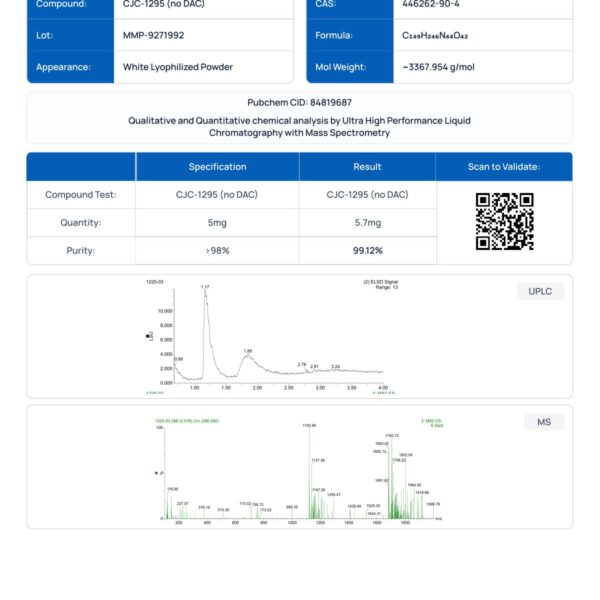
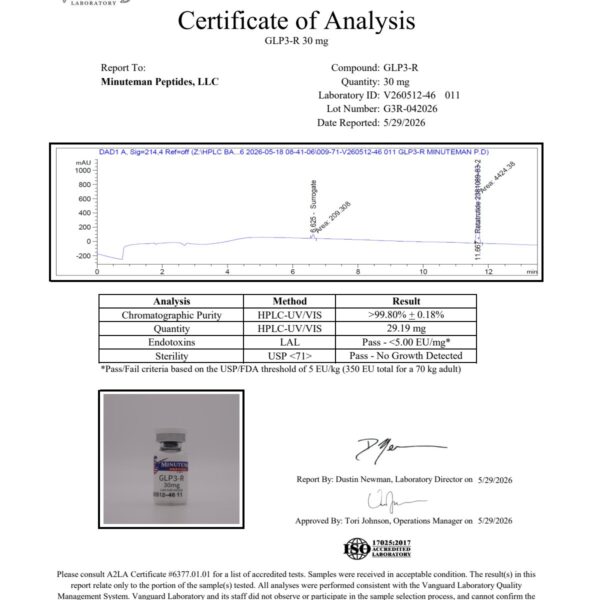
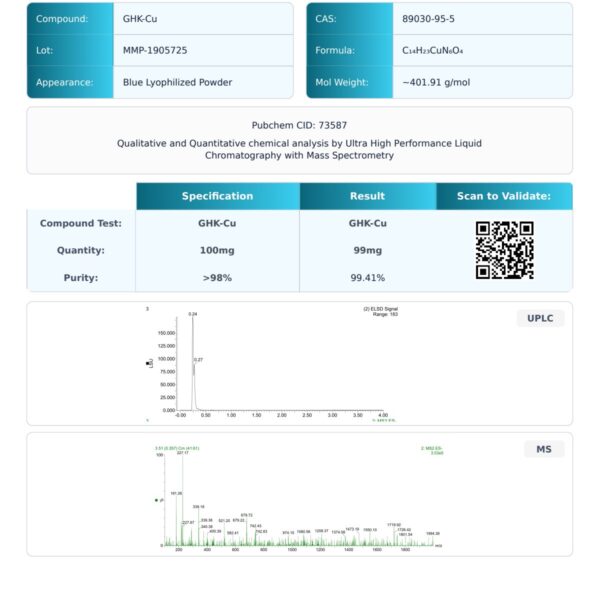
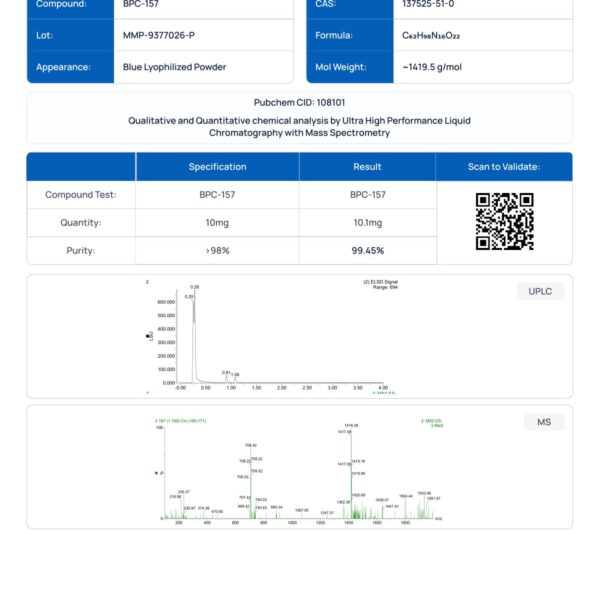
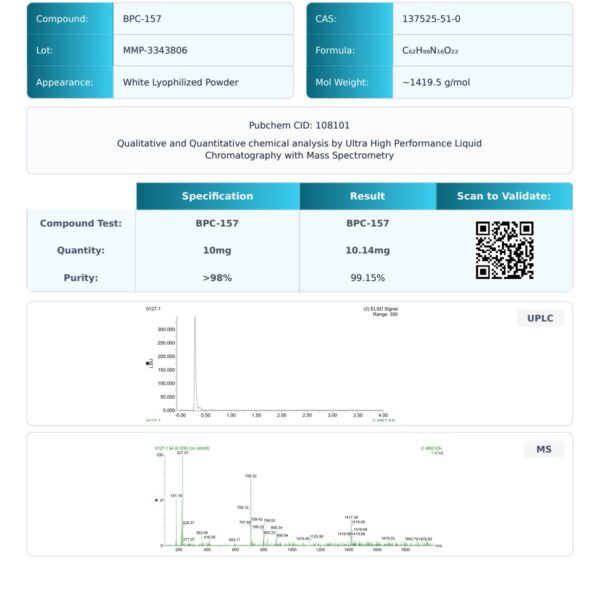
A complete COA includes several key sections. The header identifies the testing laboratory, the client, the material tested, and the batch or lot number. This information connects the results to a specific batch of material. Always verify the batch number matches your purchase order.
The test methods section describes which analytical techniques were used. Common methods for peptide testing include HPLC (High-Performance Liquid Chromatography) for purity and mass spectrometry for molecular weight confirmation. The COA should specify the method name and reference (often a published standard or the laboratory’s validated method). This tells you whether appropriate techniques were applied.
The results section presents the actual measurements. For a peptide, you’ll typically see purity percentage, water content, and identity confirmation. Each result should include the measured value and the measurement uncertainty. A result of “98.5% ± 0.8%” is more informative than “98.5%” because it shows the range of confidence.
Acceptance criteria are the specifications the material was tested against. The COA should state what the material was supposed to meet. If the specification was ≥ 98% purity and the result is 98.5%, the material passed. If the specification was ≥ 99% and the result is 98.5%, the material failed. Always verify that results meet your required specifications.
Look for the accreditation statement. An ISO 17025 certified laboratory will include language stating the testing was performed under ISO/IEC 17025 accreditation and will identify the accreditation body. This statement provides assurance that the results were generated under rigorous standards. Be cautious of COAs that claim ISO 17025 compliance without clear accreditation language.
The signature or approval section indicates who authorized the results. Responsible laboratories require a qualified reviewer to approve results before release. This adds another layer of quality control.
Common mistakes when reading COAs: assuming all laboratories follow the same methods, ignoring measurement uncertainty, not verifying batch numbers match your order, and accepting results without checking whether they meet your specifications. Spend time understanding your COA before using the material in research.
Building Confidence in Your Research Results
Research credibility rests on three pillars: sound methodology, accurate measurements, and reliable materials. You control methodology through experimental design. You verify accurate measurements through peer review and replication. But reliable materials depend on your suppliers.
When you choose a supplier, you’re making a decision about the foundation of your research. A peptide with unverified purity might perform differently than expected. Contamination might interfere with your assays. Batch-to-batch variation might prevent replication. These problems don’t just waste time, they undermine the integrity of your findings.
ISO 17025 certification is a signal that a testing laboratory has been audited and verified to meet rigorous standards. But certification alone isn’t enough. You should also evaluate whether the laboratory tests the specific material properties you care about, whether measurement uncertainty is reported, and whether results are traceable to recognized standards.
Ask your supplier these questions: Are your materials tested by an ISO 17025 certified laboratory? Can you provide the full COA, not just a summary? What is the measurement uncertainty for purity testing? How frequently is the testing equipment calibrated? What happens if a batch fails testing? These questions separate suppliers who take quality seriously from those treating certification as marketing language.
At Minuteman Peptides, we’ve built our reputation on transparency. Every batch is tested at an independent ISO/IEC 17025 certified laboratory using HPLC and Mass Spectrometry. We provide complete Certificates of Analysis showing measured values, measurement uncertainty, and accreditation information. We source materials from cGMP-certified US-based manufacturing facilities. This commitment to verification means you can cite our materials with confidence in your publications.
Conclusion
ISO 17025 certification represents a commitment to measurement accuracy, technical competence, and quality assurance. For research institutions and laboratories, it’s the standard that separates verified material quality from unsubstantiated claims. Understanding what the certification means, what it requires, and how to evaluate COA documents helps you make informed decisions about your research materials.
The integrity of your research depends on starting with materials you can trust. Minuteman Peptides provides high-quality research compounds tested by independent ISO/IEC 17025 certified laboratories, with verified HPLC and Mass Spectrometry results delivered transparently on every Certificate of Analysis. Our cGMP-certified US-based manufacturing ensures purity and repeatability for your in vitro research studies. When your research matters, choose materials backed by verified quality and transparent documentation. Shop Minuteman Peptides and access the material quality your research deserves.
Frequently Asked Questions
What is the primary purpose of ISO 17025 certification?
ISO 17025 certification demonstrates that a laboratory has the technical competence, quality management systems, and measurement traceability to produce valid, reliable test results. The standard ensures laboratories meet international benchmarks for testing accuracy and data integrity. For research peptides, ISO 17025 accreditation means the laboratory’s testing methods, equipment calibration, and staff qualifications have been independently verified by an accreditation body, providing confidence that reported purity, composition, and potency data reflect the actual sample quality.
How does ISO 17025 differ from ISO 9001 quality management standards?
ISO 9001 is a general quality management system standard applicable to any organization, focusing on process documentation and customer satisfaction. ISO 17025, by contrast, is specifically designed for testing and calibration laboratories. It requires technical standards such as measurement uncertainty calculations, traceability to national standards, proficiency testing participation, and technical protocols for specific test methods. While ISO 9001 ensures a company has documented processes, ISO 17025 ensures a laboratory can produce scientifically valid results that meet defined technical specifications.
Why is third-party ISO 17025 testing critical for research peptides?
Third-party testing by an ISO 17025 accredited laboratory eliminates bias and ensures independent verification of product quality. Because your research depends on accurate, repeatable compound purity and composition, having an external laboratory verify results protects your experimental validity. An accredited third-party laboratory must maintain calibrated instruments, document measurement uncertainty, and follow standardized test methods, safeguards that in-house testing or non-accredited suppliers cannot guarantee. This independence also provides audit readiness and regulatory compliance documentation if your research supports future submissions or publications.
What should I look for in a Certificate of Analysis (COA)?
A robust COA from an ISO 17025 accredited laboratory should include the laboratory’s accreditation number and scope, the specific test methods used (such as HPLC or Mass Spectrometry), measured purity percentages with measurement uncertainty ranges, the calibration status of instruments, the sample identification and batch number, the testing date, and the signature of an authorized laboratory representative. The COA should also reference the accreditation body that verified the laboratory. Verify the accreditation number through the accreditation body’s public database to confirm legitimacy.
Does ISO 17025 accreditation guarantee 100% accurate test results?
ISO 17025 accreditation does not guarantee perfection, but it ensures laboratories operate within defined measurement uncertainty limits and follow validated test methods. All measurements have inherent uncertainty; an accredited laboratory quantifies and reports this uncertainty so you understand the confidence level of results. The standard requires continuous improvement, regular audits, and proficiency testing to maintain accuracy. What accreditation does guarantee is that the laboratory has demonstrated competence, uses traceable standards, maintains calibrated equipment, and follows quality assurance protocols, significantly reducing the risk of erroneous or unreliable data.
How can I verify that a laboratory’s ISO 17025 certification is legitimate?
Verify accreditation directly through the accreditation body’s public database. In the United States, NIST (National Institute of Standards and Technology) maintains a list of accreditation bodies that grant ISO 17025 credentials. Ask the laboratory for their accreditation number and scope, the scope should explicitly list the test methods and analytes they are accredited for. Legitimate accreditation includes periodic surveillance audits and triennial reassessments, so current accreditation status can be confirmed. Be cautious of suppliers claiming accreditation without providing a verifiable accreditation number or allowing you to check the accreditation body’s records.
What is measurement traceability and why does it matter for my research?
Measurement traceability means that test results can be linked back to national or international reference standards through an unbroken chain of calibrations. For example, when a laboratory reports peptide purity of 98.5%, that measurement is traceable to certified reference standards maintained by NIST. Traceability ensures your research data is comparable across batches, reproducible in other laboratories, and defensible if results are questioned. Without traceability, you cannot be confident that two batches labeled ‘98% purity’ actually contain equivalent material, which undermines experimental repeatability.
This article was written using GrandRanker