Table of Contents
- What Separates a Reputable Peptide Supplier from the Rest
- Third-Party Testing for Research Chemicals: What to Look For
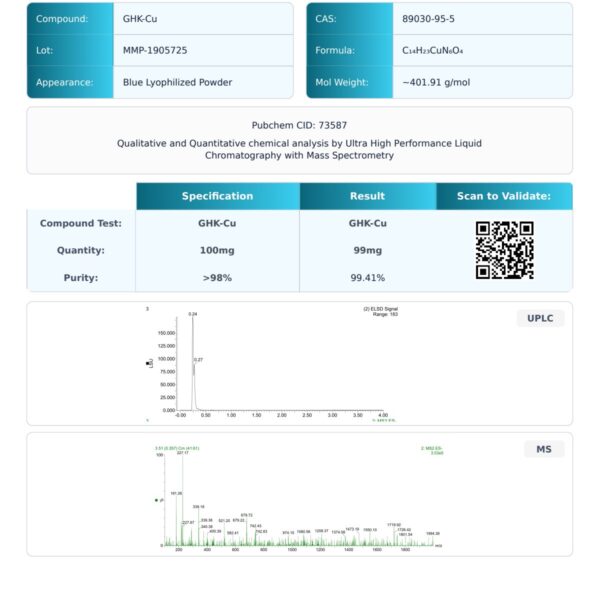
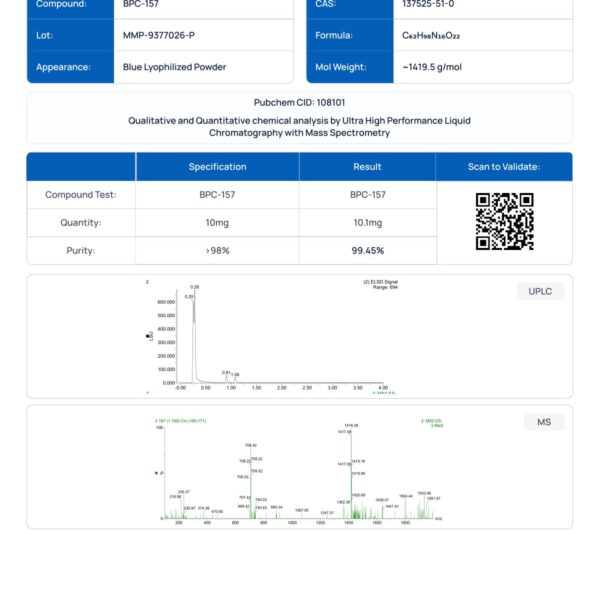
- How to Read a Peptide Certificate of Analysis
- Peptide Storage and Stability Guidelines for Research Labs
- Pricing Transparency, Shipping Logistics, and Support Responsiveness
- Regulatory Compliance and Legal Guidelines for Research Peptide Purchases
- Conclusion: Choosing the Best US Based Peptide Suppliers in 2026
- Frequently Asked Questions
Last Updated: September 11, 2026
What Separates a Reputable Peptide Supplier from the Rest
Finding reliable best US based peptide suppliers 2026 means looking past polished websites at verifiable manufacturing and testing practices. A reputable peptide supplier sources compounds from cGMP-certified domestic facilities and subjects every batch to independent third-party analysis before shipping. This guide from Minuteman Peptides breaks down what separates legitimate vendors from marketing claims.
Most researchers learn this the hard way: a vendor promises 98% purity, ships a generic certificate, and the experiment fails three weeks later. The compound was never the problem, the sourcing was.
Below, we cover the standards that matter: manufacturing certification, analytical testing, documentation transparency, and independent verification.
Third-Party Testing for Research Chemicals: What to Look For
Third-party testing means an independent lab with no financial relationship to the vendor analyzes each batch and reports the results. Independence makes the data trustworthy, but it is not enough, the test must be traceable to the specific vial in your hand.
When evaluating third-party testing for research chemicals, look for four things: the lab’s accreditation, the specificity of the analytical methods, whether results are tied to a single production lot, and whether the vendor retains a reserve sample. A vendor that tests once and reuses the certificate across production runs is not providing batch-specific verification.
Why ISO/IEC 17025 Certification Matters
ISO/IEC 17025 is the international standard for testing and calibration lab competence (iso.org). An accredited lab has been audited for its methods, equipment calibration, and personnel qualifications.
Without it, you trust an unverified lab’s word; with it, you have documented evidence that testing followed recognized protocols. Minuteman Peptides ensures every batch undergoes rigorous, independent ISO/IEC 17025 certified third-party testing, providing researchers with a verifiable chain of custody from synthesis to shipment.
A practical check: ask which specific accredited lab performed the analysis. Reputable suppliers name the lab. If the answer is “our in-house QC department” or “a partner lab we can’t disclose,” treat the certificate as marketing material.
How to Cross-Reference a CoA With the Vial in Your Hand
This step, which most guides skip, is the fastest way to catch a mismatched or recycled certificate.
- Match the lot number. The lot or batch number printed on the CoA must match the lot number on the vial label, character for character. A one-digit difference is not a typo, it means the certificate belongs to a different production run.
- Match the peptide name and sequence. Confirm the CoA lists the exact peptide name and, where applicable, the amino acid sequence or molecular formula. A certificate for a similar-sounding analog does not cover your product.
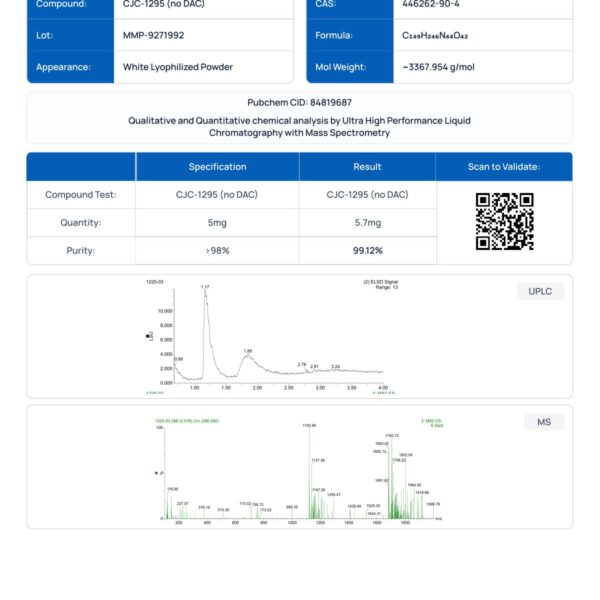
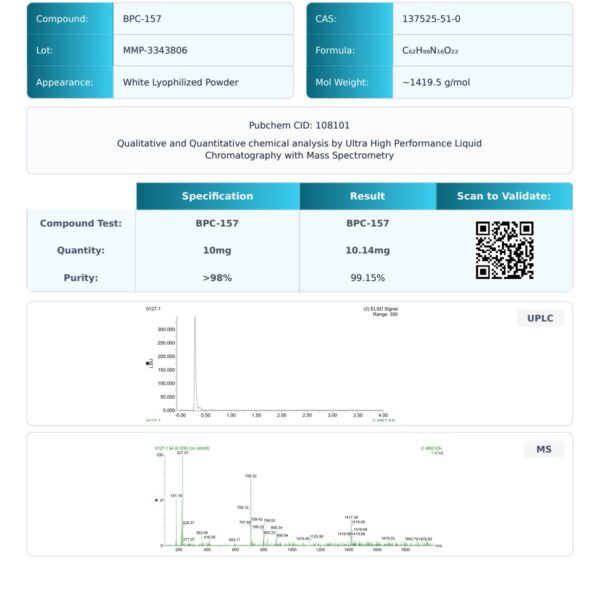
- Match the molecular weight. The MS result on the CoA should report a molecular weight consistent with the peptide’s expected mass. If the reported mass is off by more than rounding, the sample is not what the label claims.
- Check the test date. The analysis date should fall before the ship date and within a reasonable window for that lot. A certificate dated years before the vial was produced is a red flag.
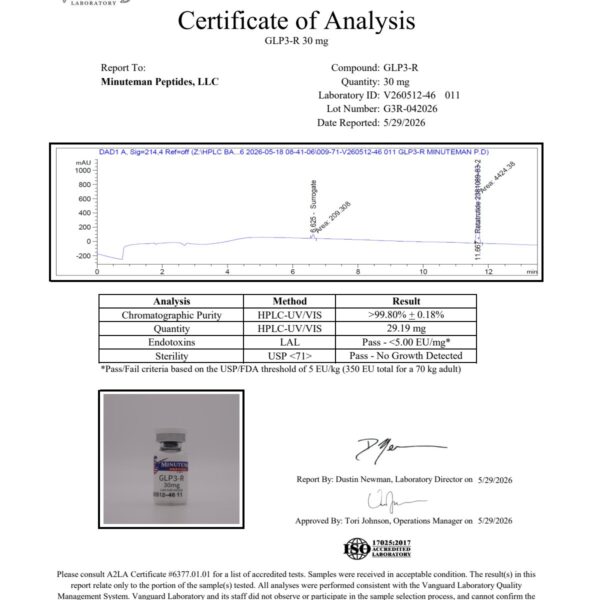
- Confirm the lab identity. The CoA should carry the testing lab’s name, and ideally an accreditation number you can look up. Cross-check that the lab actually exists and holds the accreditation it claims.
- Look for the chromatogram and spectrum, not just the summary line. A CoA that reports “98.4% purity” with no attached HPLC chromatogram or MS spectrum is a summary, not raw data. Ask for the underlying traces.
If any of these six checks fails, do not run the compound. The cost of a failed experiment, lost reagents, lost time, a repeated run, almost always exceeds the price difference between a verified and unverified batch.
Batch-Specific Testing and Lot Number Tracking
Every certificate should reference a specific lot number that matches the label on your vial. If the numbers do not match, the certificate proves nothing about your product. Ask vendors how they track lots and whether they retain samples for future verification. A supplier that cannot answer this question clearly is a supplier worth avoiding.
Before ordering from any supplier, request a sample certificate from a recent batch and run the six cross-reference checks above against a product photo. A vendor that hesitates, sends a generic document, or cannot produce a matching lot number is telling you something important about how they operate.
What Third-Party Testing Does Not Tell You
A clean CoA confirms identity and purity for the tested sample. It does not confirm sterility, endotoxin levels, residual solvents, or heavy metals unless those assays are explicitly listed. If your research requires them, ask whether the vendor offers add-on testing, and expect a separate line item. Assuming a purity-only CoA covers safety endpoints is a common and costly misreading.
How to Read a Peptide Certificate of Analysis
A certificate of analysis is only useful if you know what each section means. Most researchers scan for the purity number and ignore the rest, a mistake.
HPLC and Mass Spectrometry Data Explained
High-performance liquid chromatography (HPLC) separates compounds and measures their relative quantities, producing a chromatogram with peaks. The main peak is your target peptide; smaller peaks are impurities. A purity figure of 98% means the main peak accounts for 98% of total area.
Mass spectrometry (MS) confirms molecular identity by measuring the compound’s mass-to-charge ratio, verifying that molecular weight matches the expected sequence. HPLC tells you how pure the sample is; MS tells you whether it is the right compound.
Batch-Specific Testing and Lot Number Tracking
Every certificate should reference a specific lot number that matches the label on your vial. If the numbers do not match, the certificate proves nothing about your product. Ask vendors how they track lots and whether they retain samples for future verification. A supplier that cannot answer this question clearly is a supplier worth avoiding.
Peptide Storage and Stability Guidelines for Research Labs
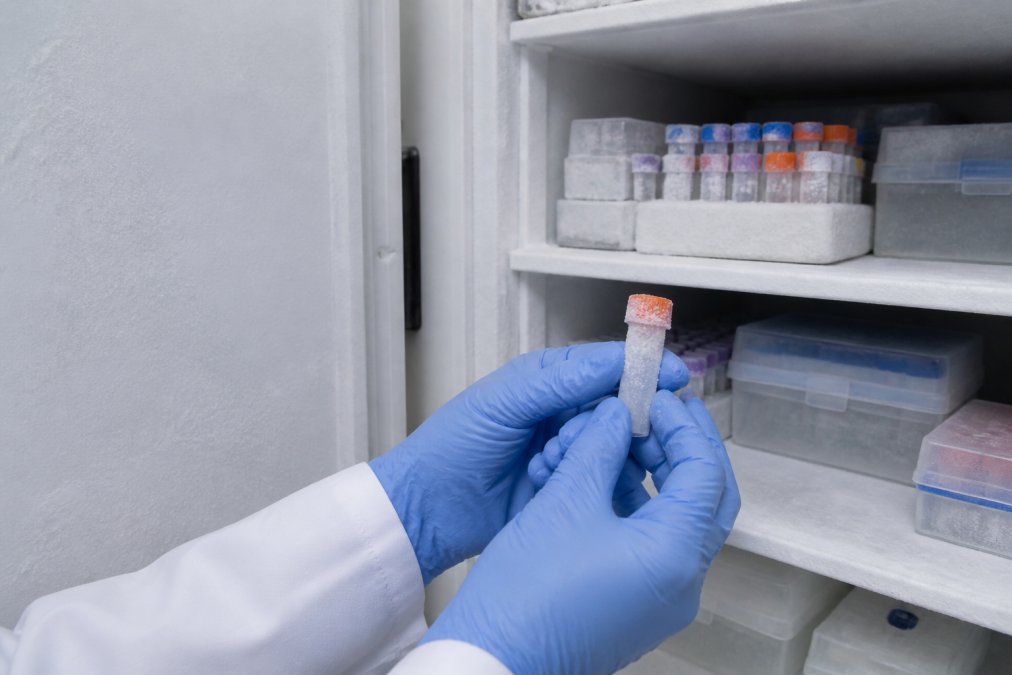
Improper storage degrades peptides faster than most researchers expect. Lyophilized powder stays stable at -20°C or lower, away from light and moisture (peer-reviewed research). Once reconstituted, most peptides require refrigeration and use within a window that varies by sequence.
Follow these peptide storage and stability guidelines to protect your work:
- Store lyophilized powder at -20°C or below, sealed with desiccant
- Avoid repeated freeze-thaw cycles, which break down peptide bonds
- Reconstitute with appropriate solvent based on solubility data
- Aliquot reconstituted peptide to avoid repeated access to the stock vial
- Label every aliquot with the lot number and reconstitution date
Stability varies significantly by sequence: a compound that lasts months in solution may degrade in weeks. Always check the vendor’s storage recommendations for the specific product.
Pricing Transparency, Shipping Logistics, and Support Responsiveness
Price per milligram tells you little without context. The real question is whether the vendor publishes clear pricing, ships with proper cold-chain handling, and answers technical questions promptly. Those three factors, transparency, logistics, and support, determine whether the compound that arrives is the one you paid for.
Pricing Transparency: What a Quote Should Include
A transparent listing shows price per vial, quantity in milligrams, the purity figure tied to a specific lot, and any handling or cold-chain surcharges before checkout. Vague pricing, “contact us for a quote,” or a single price with no unit size, makes comparison impossible and often hides a lower-purity product behind a competitive-looking number.
When comparing vendors, normalize to price per milligram of verified purity, not price per vial. A 5 mg vial at 95% purity and one at 98% are not the same product; the cheaper may cost more per usable milligram once you account for the impurity fraction.
Cold-Chain Shipping: What Actually Protects the Compound
Shipping logistics matter more than most researchers admit. Peptides shipped without temperature control or proper packaging can arrive degraded, especially in warmer months. Ask whether the vendor uses insulated packaging and provides tracking.
A few specifics worth confirming before you order:
- Insulated packaging with a phase-change coolant rather than a single gel pack, which can warm through in transit.
- Overnight or two-day service for temperature-sensitive compounds, with tracking that updates at each handoff.
- Discreet, tamper-evident outer packaging so the vial is not exposed to heat or handling damage.
- A stated policy for temperature excursions, what the vendor does if tracking shows a delay that would compromise the cold chain.
If a vendor cannot describe its packaging in specific terms, assume the default is a padded envelope and plan accordingly.
Support Responsiveness: The Pre-Sale Test
Support responsiveness is the clearest signal of vendor reliability. Send a specific technical question before ordering, the recommended reconstitution solvent for a peptide, or the storage temperature for lyophilized powder. If the response is vague, templated, or slow, expect the same after you pay.
A useful benchmark: a technical question sent during business hours should get a substantive answer within one business day. “Please see our FAQ” is not a technical answer.
Reconstitution and Handling: The Step That Determines Whether Your Data Holds
Most buying guides stop at the order. The handling steps after delivery are where experiments quietly fail.
- Reconstitute with the correct solvent. Bacteriostatic water is common for many research peptides, but some sequences require sterile water, dilute acetic acid, or a specific buffer for full solubility. Check the vendor’s solubility data for the exact compound, do not assume one solvent works across the catalog.
- Add solvent down the side of the vial, not directly onto the powder, and swirl gently. Do not vortex or shake, which can shear the peptide and introduce foam.
- Use a sterile syringe and filter where the protocol calls for it, and wipe the septum with an alcohol swab before and after each access.
- Aliquot before freezing. Dividing a reconstituted stock into single-use volumes avoids repeated freeze-thaw cycles, which break down peptide bonds.
- Label every aliquot with the peptide name, lot number, concentration, and reconstitution date. Unlabeled aliquots are the most common source of cross-contamination in shared lab freezers.
A compound that arrives at 98% purity can still produce unusable data if reconstituted in the wrong solvent or repeatedly thawed and refrozen. Handling discipline is part of the product.
| Evaluation Criteria | What to Check | Why It Matters |
|---|---|---|
| Manufacturing | cGMP-certified domestic facility | Ensures consistent production standards |
| Testing | ISO/IEC 17025 accredited lab | Verifies independent analysis |
| Documentation | Batch-specific CoA with lot number | Confirms your product was tested |
| Shipping | Insulated packaging, phase-change coolant, tracking | Prevents degradation in transit |
| Support | Technical answer within one business day | Signals post-sale reliability |
| Handling | Solvent-specific reconstitution guidance provided | Reduces user error and failed runs |
A common mistake is ordering based on price alone. A cheaper peptide that fails mid-experiment costs more in lost time and repeated runs than a properly tested batch. Always verify the certificate before committing to a supplier, and budget for the handling supplies, sterile water, syringes, filters, and labeled aliquots, that protect the investment.
Transparency, cold-chain logistics, and handling guidance are not perks, they are the difference between a compound that performs and one that quietly degrades before your first assay. Treat the vendor’s shipping and reconstitution documentation as part of the product specification, and hold suppliers to it.
Regulatory Compliance and Legal Guidelines for Research Peptide Purchases
Peptides sold for research operate under a different regulatory framework than pharmaceuticals. The FDA does not approve research chemicals for human use, and vendors must label products accordingly (the FDA). Any supplier claiming their peptides are “FDA approved” for human consumption is misrepresenting their status.
Researchers should confirm the vendor labels products as laboratory use only and makes no therapeutic claims. Purchasing peptides for research is legal, but using them outside that context falls outside the vendor’s stated purpose and may violate federal or state law.
Before ordering from any supplier, request a sample certificate from a recent batch. A vendor that hesitates or sends a generic document is telling you something important about how they operate.
Conclusion: Choosing the Best US Based Peptide Suppliers in 2026
The gap between a reliable supplier and a risky one comes down to verifiable documentation. Manufacturing certification, independent testing, batch-specific certificates, and responsive support are not optional features. They are the baseline.
At Minuteman Peptides, every product is sourced from cGMP-certified facilities and tested by an independent ISO/IEC 17025 accredited laboratory. Certificates of analysis are available for every batch, with verified HPLC and mass spectrometry results. Minuteman Peptides offers free shipping on orders over $200.
Get started with Minuteman Peptides and source compounds you can trust for repeatable research.
Frequently Asked Questions
What criteria define a reputable peptide supplier in 2026?
A reputable peptide supplier in 2026 should manufacture in cGMP-certified domestic facilities, provide independent third-party testing through ISO/IEC 17025 certified labs, and publish batch-specific certificates of analysis with HPLC and mass spectrometry data. Vendor transparency, lot number tracking, and responsive customer support also matter. Look for suppliers who can explain their analytical testing process clearly and provide documentation that matches the specific batch you receive, not generic test results.
How can researchers verify the authenticity of HPLC and Mass Spectrometry results?
Researchers should request the certificate of analysis for the exact lot number they receive and confirm it includes both HPLC purity data and mass spectrometry results. Check that the testing lab is ISO/IEC 17025 certified and independent from the manufacturer. Compare the molecular weight on the COA to the known molecular weight of the peptide sequence you ordered. If a supplier cannot provide batch-specific analytical reports, that is a red flag for quality assurance.
What are the regulatory considerations for purchasing research-grade peptides?
Research-grade peptides are intended strictly for laboratory use only and are not for human or animal consumption. Researchers should confirm that suppliers label products accordingly and follow applicable federal and state regulations. Institutions typically require documentation of the peptide source, purity, and intended use. Always verify that your purchase complies with your institution’s research guidelines and that the supplier provides proper documentation for regulatory compliance.
How should peptides be stored to maintain stability during long-term research projects?
Lyophilized powder should be stored at -20°C or lower, protected from light and moisture. Once reconstituted, peptides are generally less stable and should be aliquoted to avoid repeated freeze-thaw cycles. Follow peptide storage and stability guidelines specific to each compound, as solubility and stability vary. Keep detailed records of storage conditions and use standard operating procedures to maintain consistency across experiments.