
Table of Contents
- What Makes a Peptide Manufacturer Legitimate
- cGMP Peptide Manufacturing Requirements
- ISO Certification Standards for Peptide Quality
- HPLC and Mass Spectrometry Analysis Standards
- Research Peptide Sourcing Best Practices
- Regulatory Audit Checklist for Peptide Buyers
- Post-Synthesis Stability and Storage Protocols
- Frequently Asked Questions
Last Updated: September 2, 2026
What Makes a Peptide Manufacturer Legitimate
The difference between a reliable peptide supplier and one that compromises your research comes down to three things: verifiable certifications, transparent testing protocols, and documented traceability. Most researchers discover this the hard way, after a batch fails or produces inconsistent results that waste months of work.
Legitimacy in peptide manufacturing isn’t about marketing claims. It’s about systems. A legitimate manufacturer operates under cGMP standards, maintains ISO certifications, and provides independent third-party testing results. These aren’t optional add-ons; they’re the foundation that separates suppliers you can trust from those gambling with your research integrity.
At Minuteman Peptides, we’ve built our reputation on this foundation. Every batch we source comes from cGMP-certified facilities and undergoes independent ISO/IEC 17025 certified testing. But understanding what these standards actually mean, and why they matter for your specific research, requires looking deeper than marketing language.
The first checkpoint is always documentation. If a supplier can’t provide a complete chain of custody from raw material sourcing through final synthesis, walk away. Legitimate manufacturers document everything: material origins, synthesis parameters, quality control checkpoints, and analytical results. This paper trail protects your research and ensures reproducibility across batches.
cGMP Peptide Manufacturing Requirements
cGMP (Current Good Manufacturing Practice) compliance is the regulatory floor for any peptide manufacturer serving research institutions (the FDA). The FDA establishes these standards to ensure consistency, quality, and safety in manufacturing processes. For research peptides, cGMP compliance means the manufacturer follows documented procedures, maintains controlled environments, and implements quality checks at every production stage.
Documentation and Batch Traceability
Every batch produced under cGMP must be fully documented from synthesis through quality control. This documentation includes raw material certificates, equipment calibration records, environmental monitoring data, and analytical test results. Traceability means you can trace any peptide batch back to its source materials, the specific equipment used, the technicians involved, and every quality control checkpoint.
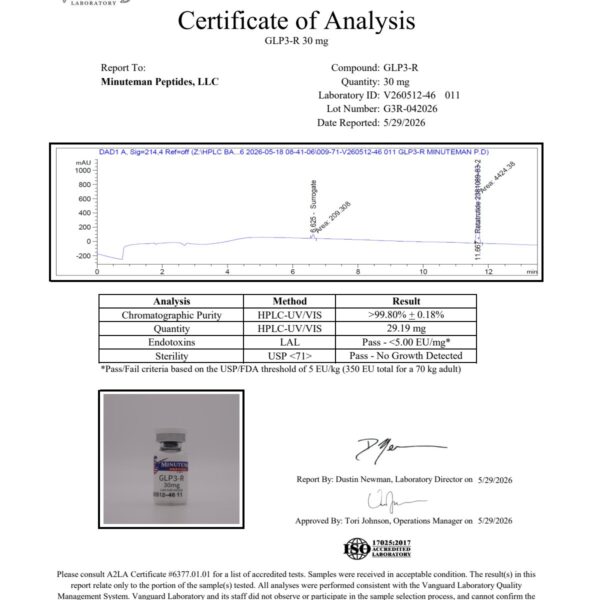
When you request a Certificate of Analysis from a legitimate manufacturer, you’re receiving documentation that proves this traceability. The COA should list the batch number, synthesis date, testing methods used, acceptance criteria applied, and results for each test. Without this level of detail, you have no way to verify that what you received matches what was tested.
Many researchers ask: what happens if I need the same peptide in six months? A cGMP-certified manufacturer maintains batch records that allow them to reproduce the exact synthesis conditions. This consistency is critical for longitudinal studies where you need identical materials across multiple experimental phases.
Quality Management Systems
cGMP requires manufacturers to implement a quality management system that includes standard operating procedures for every aspect of production. These procedures cover equipment maintenance, environmental controls, personnel training, and deviation management. When something goes wrong, equipment fails, a test falls outside acceptance criteria, or contamination is detected, the QMS requires documented investigation and corrective action.
This is where the difference between cGMP and non-compliant facilities becomes stark. A compliant manufacturer doesn’t hide batch failures; they document them, investigate root causes, and implement corrections before releasing any material. Non-compliant suppliers often simply discard failed batches and move on, with no accountability and no learning.
ISO Certification Standards for Peptide Quality
ISO certifications provide an independent third-party verification that a manufacturer’s quality systems meet international standards. The most relevant certifications for peptide manufacturing are ISO 13485 (medical device quality management) and ISO/IEC 17025 (laboratory testing competence).
ISO 13485 and Medical Device Manufacturing
ISO 13485 applies when peptides are manufactured for use in medical devices or diagnostic applications. This standard requires manufacturers to implement risk management processes, design controls, and post-market surveillance systems. Even for research peptides, ISO 13485 compliance demonstrates that a manufacturer understands and implements rigorous quality discipline.
The standard covers everything from raw material evaluation to final product release. Manufacturers must establish acceptance criteria for materials, validate their testing methods, and maintain traceability records. An ISO 13485-certified facility has been audited by an independent body that verifies these systems are actually in place and functioning.
ISO/IEC 17025 Third-Party Testing Validation
ISO/IEC 17025 is the critical standard for testing laboratories (iso.org). This certification verifies that a lab has the competence, equipment, and procedures to produce valid analytical results. When a manufacturer claims their peptides are tested for purity using HPLC, the legitimacy of that claim depends on whether the testing was performed in an ISO/IEC 17025-certified laboratory.
Third-party testing adds a layer of independence. When Minuteman Peptides sends samples to an ISO/IEC 17025-certified lab for analysis, that lab has no financial incentive to inflate purity numbers or hide impurities. The lab’s certification depends on maintaining accuracy and transparency. This is why independent testing matters more than in-house testing, even when in-house labs are technically competent.
HPLC and Mass Spectrometry Analysis Standards
HPLC (High-Performance Liquid Chromatography) and Mass Spectrometry are the analytical methods that determine peptide purity and identity. Understanding what these tests actually measure, and how to interpret the results, separates informed buyers from those relying on supplier claims.

Understanding Purity Profiles and Acceptance Criteria
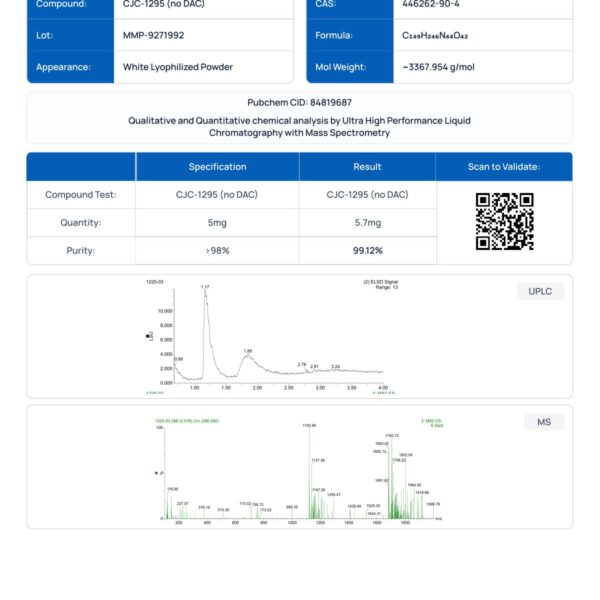
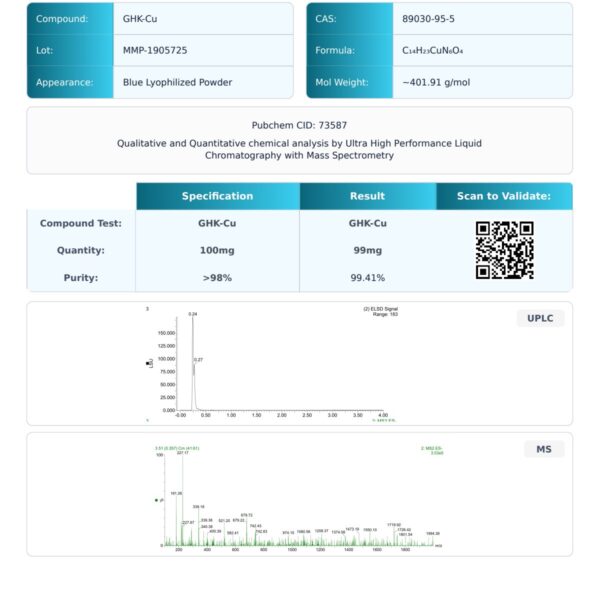
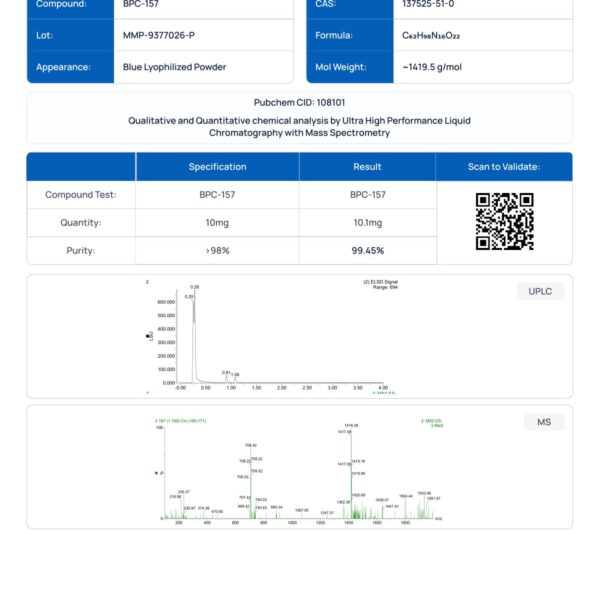
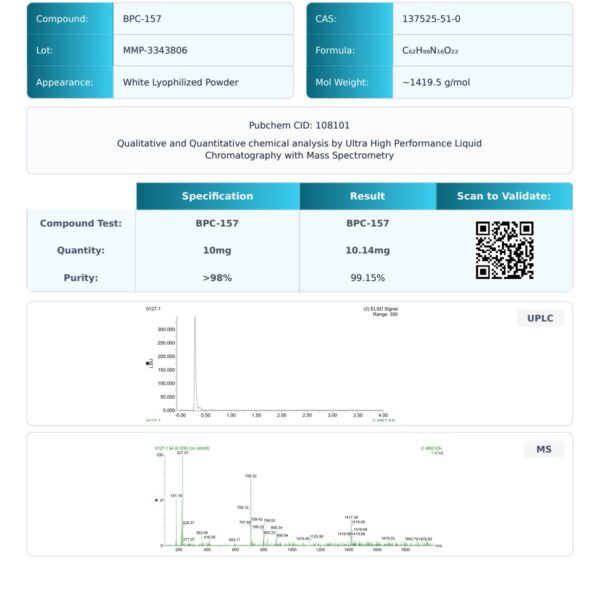
HPLC separates peptide components by molecular properties, allowing the analyst to quantify the percentage of target peptide versus impurities. A purity result of 98% doesn’t tell you what the other 2% is. That’s where the detailed chromatogram matters. The HPLC report should show individual peaks, their retention times, and their percentages. Impurities might be truncated peptide fragments, oxidized variants, or residual synthesis reagents.
Acceptance criteria define what purity level is acceptable for your research. A peptide intended for structural studies might require 95% purity, while one for cellular signaling research might need 99%. The manufacturer should help you establish appropriate criteria based on your experimental design. A legitimate supplier doesn’t just provide test results; they explain what those results mean for your specific application.
Mass Spectrometry provides complementary information. While HPLC measures purity by percentage, MS confirms the molecular weight and structure of the target peptide. MS can detect modifications, misfolding, or contamination that HPLC might miss. Together, HPLC and MS provide confidence that you’re receiving the peptide you ordered, at the purity you need.
Interpreting Certificates of Analysis
A COA is only as useful as your ability to interpret it. The document should include several key sections: the peptide sequence and molecular weight, the testing methods used, the acceptance criteria applied, and the actual results. Look for specific values, not vague statements like “passes purity test.”
Many researchers have experienced this problem: a COA claims 98% purity, but when you examine the chromatogram, you see a large unidentified peak that the manufacturer classified as “acceptable.” This is where detailed knowledge helps. If you can’t identify what that peak is, you can’t trust the result. A legitimate manufacturer will explain every significant peak and justify why it’s acceptable for your application.
Discrepancies between COAs can occur. If you order the same peptide from different suppliers, the purity values might differ by 2-3%. This isn’t necessarily dishonesty; it reflects differences in testing methods, calibration, and acceptance criteria. However, if the same supplier gives you drastically different purity values for the same peptide across different batches, that’s a red flag. Batch consistency matters.
Research Peptide Sourcing Best Practices
Sourcing peptides for research requires evaluating not just the final product, but the entire supply chain. Raw material quality, synthesis methods, and quality control practices all influence the final peptide you receive.
Evaluating Raw Material Sourcing and Impurity Profiling
The purity of your final peptide depends significantly on the purity of the amino acids and reagents used in synthesis. A manufacturer sourcing low-grade amino acids can’t produce high-purity peptides, regardless of their synthesis expertise. Legitimate manufacturers maintain specifications for raw materials and verify supplier certifications before accepting shipments.
Impurity profiling goes beyond purity percentage. It involves identifying and quantifying specific impurities: truncated sequences, oxidized variants, salt residues, or organic solvent traces. Your research might be sensitive to specific impurities. For example, if you’re studying protein-peptide interactions, oxidized methionine residues could affect binding kinetics. A detailed impurity profile lets you assess whether the peptide is suitable for your experiment.
Some researchers ask whether cheaper peptides from unverified sources might work “well enough.” The honest answer: sometimes they do, and sometimes they don’t. The risk is that you won’t know until you’re deep into an experiment and results don’t replicate. By then, you’ve invested time and reagents. Starting with verified, documented peptides eliminates this uncertainty.
Batch Consistency and Long-Term Supply Agreements
If your research spans 18 months or longer, you’ll need multiple batches of the same peptide. Batch-to-batch consistency is critical. Purity should vary by no more than 2-3% between batches from a reliable manufacturer (peer-reviewed research). If you see larger variations, the manufacturer’s quality control is inconsistent.
Long-term supply agreements with a trusted manufacturer provide security. You establish consistent pricing, guaranteed delivery timelines, and documented batch specifications. The manufacturer commits to maintaining the same synthesis parameters and quality standards across all batches you order. This consistency is invaluable for longitudinal studies or multi-phase research projects.
Regulatory Audit Checklist for Peptide Buyers

Before committing to a peptide supplier, conduct a basic regulatory audit. This checklist helps you verify that a manufacturer actually meets the standards they claim.
Verification Steps:
- Request the manufacturer’s current cGMP certificate or documentation of cGMP compliance. Verify the certificate hasn’t expired and covers the specific manufacturing facility you’ll be ordering from.
- Ask for ISO 13485 and ISO/IEC 17025 certificates directly from the certifying body’s website if possible. Verify the scope of certification includes peptide manufacturing and testing.
- Request a sample COA and review it for completeness: batch number, synthesis date, testing methods, acceptance criteria, and detailed results for HPLC and MS analysis.
- Ask how the manufacturer handles batch failures or out-of-specification results. A legitimate supplier should explain their deviation investigation process.
- Verify that third-party testing is truly independent, the testing lab should not be owned by or financially dependent on the manufacturer.
- Request references from other research institutions using their peptides. A established supplier should have documented customer relationships.
- Confirm the manufacturer’s approach to batch retention and stability testing. How long do they retain samples? What stability data can they provide?
- Clarify the manufacturer’s policy on batch replacement or refund if a peptide fails to meet specifications after you receive it.
This checklist addresses the common concern from researchers: how do you know certifications aren’t just marketing claims? By requesting documentation directly and verifying independently, you eliminate guesswork. A manufacturer confident in their compliance will provide this information readily.
Post-Synthesis Stability and Storage Protocols
A high-purity peptide stored improperly degrades quickly, defeating the purpose of purchasing quality material. Stability and storage protocols matter as much as synthesis quality.
Peptides are susceptible to degradation through oxidation, hydrolysis, and microbial contamination. The manufacturer should provide specific storage instructions: temperature range, light conditions, humidity levels, and recommended storage duration. Lyophilized peptides (freeze-dried) are more stable than aqueous solutions, but even lyophilized material degrades over time if stored improperly.
Request stability data from the manufacturer. How much does purity degrade after 6 months, 12 months, or 18 months of storage? This data helps you plan your research timeline and understand whether you need fresh peptide batches or can rely on stored material. A manufacturer with rigorous quality systems will have tested their peptides under various storage conditions and can provide this information.
When you receive a peptide batch, verify the receipt date and storage conditions immediately. If a peptide arrives at room temperature when it should have been shipped on ice, contact the manufacturer before using it. Documentation of proper handling protects your research and provides evidence if a batch fails to perform as expected.
Evaluating a peptide manufacturer requires moving beyond marketing claims to examine actual systems, certifications, and documentation. cGMP compliance, ISO certifications, independent third-party testing, and detailed Certificates of Analysis form the foundation of supplier reliability. When you source from a manufacturer that prioritizes transparency, providing complete documentation, explaining test results, and standing behind batch consistency, your research gains the stability it needs.
At Minuteman Peptides, we’ve built our reputation on this commitment. Every peptide we source comes from cGMP-certified US-based manufacturing facilities and undergoes rigorous independent ISO/IEC 17025 certified third-party testing with verified HPLC and Mass Spectrometry results. We provide transparent Certificates of Analysis and maintain detailed batch documentation. This approach ensures your research isn’t compromised by sub-standard or impure supplies, giving you the purity and repeatability required for in vitro research studies. Shop our verified peptide selection and experience the difference that legitimate manufacturing standards make.
Frequently Asked Questions
Q: How can I verify that a peptide manufacturer’s ISO/IEC 17025 certification is legitimate?
A: Request the manufacturer’s scope of accreditation document directly from their accrediting body. Verify the accreditor is recognized by a national authority. Check that the scope explicitly lists peptide testing methods relevant to your research, HPLC, Mass Spectrometry, or amino acid analysis. Ask the manufacturer for their most recent surveillance audit report. Legitimate certifications are updated annually and are publicly verifiable; marketing claims without third-party documentation should raise concerns about the validity of their testing standards.
Q: What should I look for in a Certificate of Analysis to ensure it reflects actual batch quality?
A: A credible Certificate of Analysis includes specific batch identification numbers, testing dates, analytical methods used (HPLC, Mass Spectrometry), purity percentages with acceptance criteria clearly stated, and the accredited laboratory’s name and ISO/IEC 17025 certification number. The COA should list impurity profiles, not just a single purity figure. Verify that the testing laboratory is independent from the manufacturer and that results include raw data or chromatograms, not just summary conclusions. Cross-reference the COA’s issue date with your delivery date, significant gaps may indicate the results do not reflect your actual shipment. Request the raw analytical data if the COA summary alone seems inconsistent with your experimental results.
Q: Why does batch consistency matter for long-term research projects?
A: Inconsistent peptide purity or composition across batches introduces variability that confounds experimental results and makes it impossible to distinguish between true biological effects and supply-related fluctuations. For research spanning 18 months or longer, batch-to-batch variation can invalidate longitudinal studies or prevent replication of earlier findings. Manufacturers with robust quality management systems and documented process development controls deliver consistent purity profiles, acceptance criteria, and analytical validation across multiple production runs. Before committing to a long-term supply agreement, request historical COAs from at least three prior batches of the same peptide to confirm consistency in purity, impurity profiles, and analytical methods.
Q: What is the difference between research-grade and pharmaceutical-grade peptides?
A: Pharmaceutical-grade peptides are manufactured under FDA-regulated cGMP standards and are intended for clinical or therapeutic use, requiring extensive documentation, stability testing, and regulatory approval. Research-grade peptides are produced under cGMP protocols and third-party tested for purity and identity but are not licensed for human consumption and do not require FDA approval. Both should meet high analytical standards, HPLC and Mass Spectrometry validation, but pharmaceutical-grade peptides undergo additional regulatory scrutiny and cost more. For in-vitro research studies, research-grade peptides from cGMP-certified manufacturers with ISO/IEC 17025 third-party testing provide the purity and traceability necessary for experimental repeatability without the regulatory overhead of pharmaceutical-grade materials.
This article was written using GrandRanker