Table of Contents
- Why Storage Determines Experimental Reproducibility
- Lyophilized vs. Reconstituted: Stability Profiles That Change Your Protocol
- Recommended Storage Temperatures: -20°C vs. -80°C
- Peptide Degradation Factors in Laboratory Settings
- The Impact of Freeze-Thaw Cycles on Peptide Stability
- Peptide Reconstitution Best Practices for Long-Term Use
- How to Verify Integrity After Storage: A Troubleshooting Guide
- Build a Storage SOP for Batch Consistency
- Frequently Asked Questions
Last Updated: September 7, 2026
Why Storage Determines Experimental Reproducibility
Peptide storage is the most common source of irreproducible data in biochemical research, yet it remains one of the most overlooked variables in experimental design. A peptide that degrades between the purity analysis and the assay does not fail visibly; it produces subtly shifted results that erode the statistical power of an entire study.
The core principle is simple: storage conditions dictate the degradation rate, and degradation rate dictates whether your results reflect the peptide or its breakdown products. Lyophilized peptides stored correctly can maintain their purity profile for extended periods, while mishandled samples degrade through oxidation, hydrolysis, and microbial contamination.
Lyophilized vs. Reconstituted: Stability Profiles That Change Your Protocol
Lyophilized peptides are dramatically more stable than their reconstituted counterparts. In the dry, powder form, the peptide is locked in a matrix that limits molecular mobility, slowing hydrolysis and most degradation pathways to a near standstill. Reconstitution introduces water, which activates hydrolysis and creates an environment where microbial growth becomes a genuine risk.
This distinction should drive your entire storage strategy. A lyophilized peptide destined for use within months can remain at ambient or refrigerated temperatures in many cases, though freezer storage remains the conservative default. Once you add solvent, the clock starts: reconstituted peptides demand cold storage immediately, and the specific solvent choice influences stability.
The practical rule: store lyophilized material for the long term and reconstituted aliquots only for the short term. Never reconstitute an entire vial if your experimental plan requires only a fraction.
Recommended Storage Temperatures: -20°C vs. -80°C
The choice between -20°C and -80°C storage depends on the peptide’s sequence and your timeline. Standard laboratory freezers at -20°C provide adequate protection for most lyophilized peptides over a period of months to a year. Ultra-low temperature storage at -80°C becomes necessary for peptides containing oxidation-prone residues, such as cysteine or methionine, and for long-term archival beyond a year.
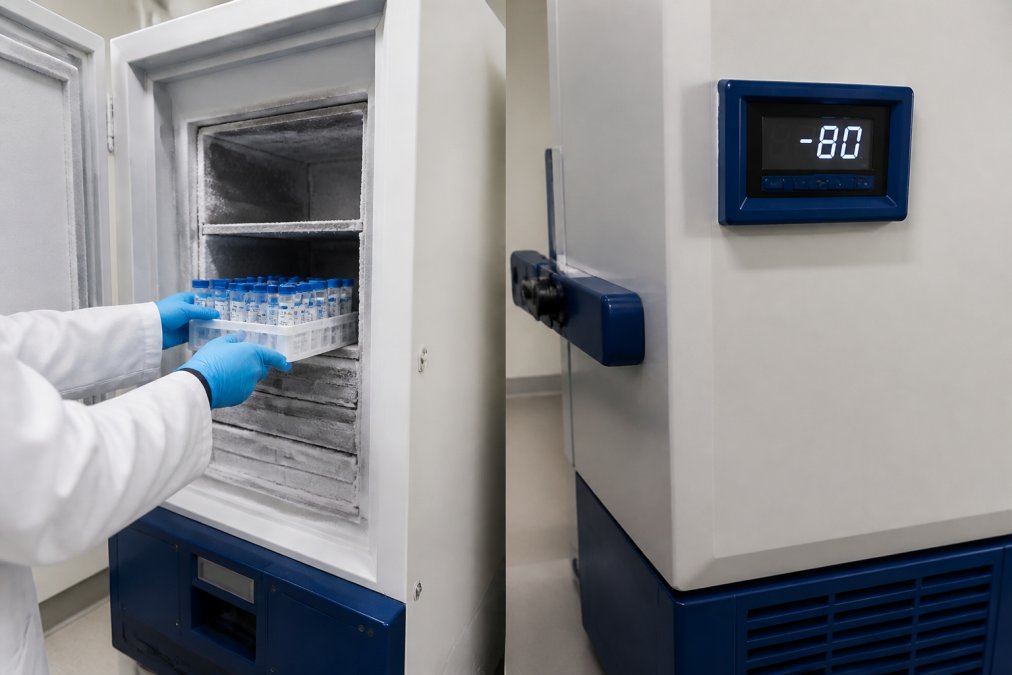
For reconstituted peptides, -80°C storage is strongly preferred when freezing is unavoidable, because the lower temperature slows hydrolysis more effectively. However, freezing introduces its own complications through freeze-thaw cycles, which we address below. If you plan to use a reconstituted peptide within days, refrigeration at 4°C may suffice for sequences with favorable stability profiles.
Cryogenic storage at -80°C does not guarantee indefinite stability. Even at ultra-low temperatures, slow oxidation and deamidation continue, meaning every peptide has a finite shelf life.
Peptide Degradation Factors in Laboratory Settings
Peptide degradation is not a single process but a set of competing chemical reactions whose rates depend on the specific amino acid sequence. Understanding these pathways lets you predict which storage conditions matter most for your particular peptide.
Oxidation: The Primary Threat to Sulfur-Containing Residues
Oxidation is the most common degradation pathway for peptides containing cysteine, methionine, or tryptophan. Methionine is particularly vulnerable, oxidizing to methionine sulfoxide even under mild conditions (peer-reviewed research). Cysteine residues can form disulfide bridges or oxidize further to sulfonic acid, permanently altering the peptide’s structure and activity. Tryptophan oxidation produces multiple products, including kynurenine, which introduces a chromophore that can interfere with spectrophotometric assays.
The rate of oxidation depends on dissolved oxygen concentration in reconstituted solutions and on atmospheric oxygen for lyophilized powders. Trace metal ions, especially iron and copper, catalyze oxidation through Fenton-type reactions. If your peptide contains these residues, consider the following:
- Use oxygen-scavenging buffers for reconstitution when the assay tolerates them.
- Purge headspace with argon or nitrogen before sealing storage vials.
- Avoid metal spatulas when handling lyophilized powder; use plastic or Teflon-coated tools.
Deamidation: A Slow, Sequence-Dependent Time Bomb
Deamidation converts asparagine and glutamine residues to aspartic acid and glutamic acid, respectively. This reaction introduces a negative charge where none existed, which can disrupt folding, receptor binding, or antibody recognition. The rate of deamidation is highly sequence-dependent: asparagine followed by glycine or serine deamidates rapidly, with half-lives measured in days at physiological pH and temperature, while other sequences may remain stable for years (PubMed).
Deamidation proceeds fastest at neutral to slightly alkaline pH. If your peptide contains Asn-Gly or Asn-Ser motifs, storage at pH 5-6 rather than pH 7.4 can substantially slow this pathway.
Hydrolysis and the Aspartate Problem
Hydrolysis cleaves peptide bonds, and the aspartate residue is uniquely susceptible. The aspartate side chain can attack its own backbone carbonyl, forming a cyclic succinimide intermediate that then opens to either aspartic acid or isoaspartic acid. This rearrangement is accelerated at acidic pH and elevated temperatures. Peptides containing Asp-Pro bonds are especially labile, as the proline nitrogen facilitates the cleavage reaction.
For peptides with known hydrolysis-prone sequences, storage at -80°C becomes more critical, and reconstituted solutions should never be left at room temperature for extended periods.
Moisture: The Accelerant That Multiplies Every Other Risk
Lyophilized peptides are hygroscopic, and their amorphous glassy matrix readily absorbs atmospheric water. Even a few minutes of exposure to ambient humidity can initiate hydrolysis in the solid state. The critical relative humidity for most lyophilized peptides is around 30-40%; above this threshold, water plasticizes the matrix and allows molecular mobility that enables degradation reactions (the NIH).
A common pattern is opening a vial, weighing out a portion, and leaving the cap off while recording data. In a typical lab at 50% relative humidity, this measurably accelerates degradation. The fix is straightforward: work quickly, recap immediately, and store opened vials in a desiccator with fresh desiccant.
Light Sensitivity: Not Universal, But Often Overlooked
Light-driven degradation primarily affects peptides containing tryptophan, tyrosine, or phenylalanine, which absorb UV light and can undergo free-radical-mediated oxidation. Peptides without aromatic residues are generally light-stable, so the universal advice to “protect from light” is less critical for those sequences, but it costs nothing to store all peptides in amber vials or foil-wrapped containers.
The Practical Takeaway
Instead of applying a one-size-fits-all storage protocol, identify which degradation pathways threaten your specific sequence. Check your peptide’s amino acid composition for methionine, cysteine, tryptophan, asparagine-glycine motifs, or aspartate-proline bonds. Each feature points to a specific vulnerability and a specific countermeasure.
The Impact of Freeze-Thaw Cycles on Peptide Stability
Every freeze-thaw cycle damages peptides, and the damage accumulates with each repetition. When an aqueous peptide solution freezes, solutes concentrate in the remaining liquid phase, creating localized pH shifts and high salt concentrations that can denature or chemically modify the peptide.
The solution is aliquoting. Before freezing a reconstituted peptide, divide it into single-use aliquots sized for one experiment. This ensures each aliquot undergoes exactly one freeze-thaw cycle. For lyophilized peptides, the freeze-thaw concern is minimal because no aqueous phase exists, but temperature cycling still introduces condensation risk if vials are not sealed properly.
Cryoprotectants offer an additional layer of protection for sensitive sequences. Many researchers add glycerol or other stabilizing agents to reconstitution buffers to reduce freeze-thaw damage, though this introduces a new variable that must be controlled across all experimental conditions.
Peptide Reconstitution Best Practices for Long-Term Use
Reconstitution best practices begin with solvent selection. Sterile water or a specified buffer, often phosphate-buffered saline, is typical, but the optimal choice depends on the peptide’s solubility characteristics. Peptides with high hydrophobicity may require a small volume of a solvent like DMSO or acetic acid before dilution into aqueous buffer.
Work in a sterile environment when possible. Even brief exposure to airborne contaminants introduces microbes that will proliferate in the nutrient-rich peptide solution. Use sterile technique, sterile vials, and sterile pipette tips throughout the process.
Document everything. Record the lot number, reconstitution date, solvent type and volume, and storage location for every vial. This transforms storage from an afterthought into a controlled experimental variable.
How to Verify Integrity After Storage: A Troubleshooting Guide
When results drift or assays fail, the stored peptide is a prime suspect. The challenge is distinguishing between peptide degradation, handling errors, and assay variability.
Tier 1: Visual and Physical Inspection (30 Seconds)
Before any analytical work, examine the sample. These observations are not definitive proof of degradation, but they are strong signals that warrant further investigation:
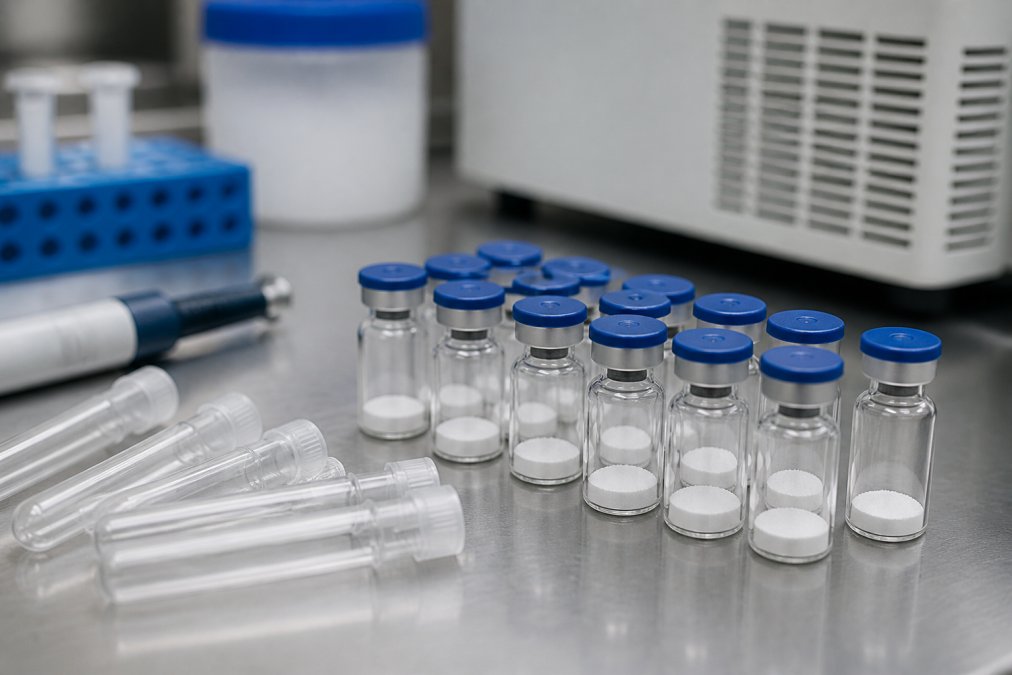
- Lyophilized powder: Fresh material is a fine, fluffy, white-to-off-white powder. Caking, clumping, yellowing, or browning indicates moisture absorption or oxidation. A vial that appears “melted” or glassy has likely undergone collapse during improper storage.
- Reconstituted solution: A clear, colorless solution is expected for most peptides. Cloudiness, precipitate, particulate matter, or color change (yellow, brown, pink) suggests aggregation, oxidation, or microbial contamination.
- Vial condition: Check for cracks, compromised seals, or visible moisture inside the vial. A vial that was stored at -20°C and shows condensation inside after warming has experienced a seal failure.
Tier 2: Functional Verification (Minutes to Hours)
If visual inspection is unremarkable but you still suspect degradation, run a functional check appropriate to your peptide’s activity:
- Solubility test: A peptide that previously dissolved readily but now requires more solvent, longer vortexing, or forms a persistent haze may have aggregated or undergone chemical modification.
- Control assay: Run a dose-response curve alongside a fresh reference standard if available. A shift in EC50 or reduced maximum response suggests activity loss.
- Spectrophotometric scan: For peptides containing tryptophan or tyrosine, an absorbance scan from 240-350 nm can reveal oxidation products. Tryptophan oxidation products absorb at 320-360 nm, which is absent in the intact peptide.
Tier 3: Analytical Confirmation (Hours to Days)
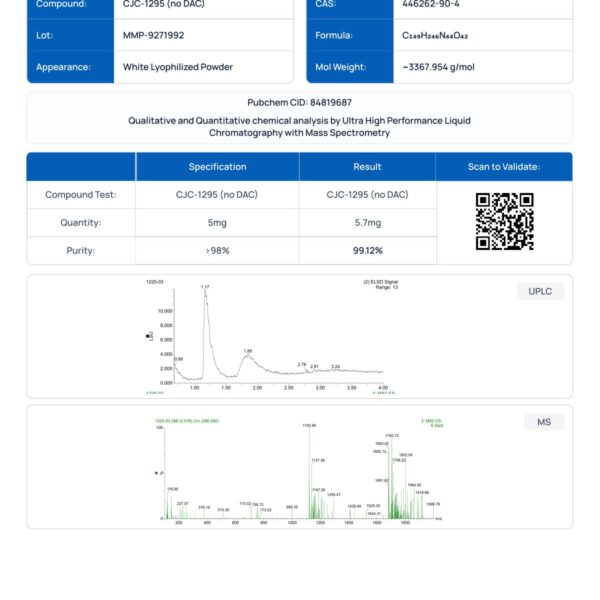
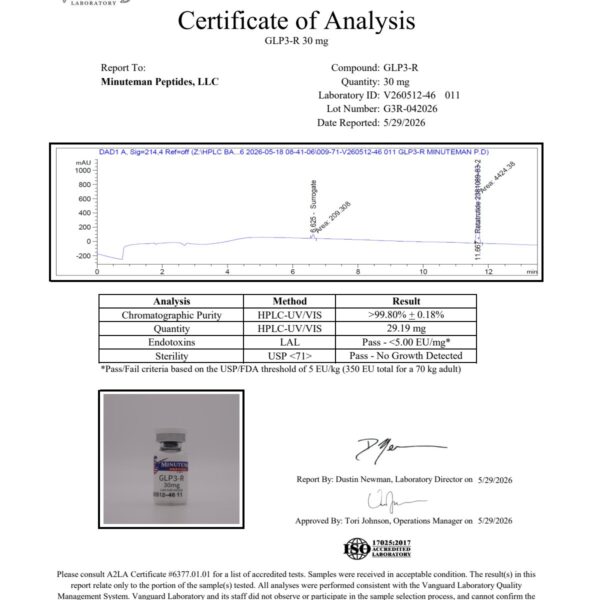
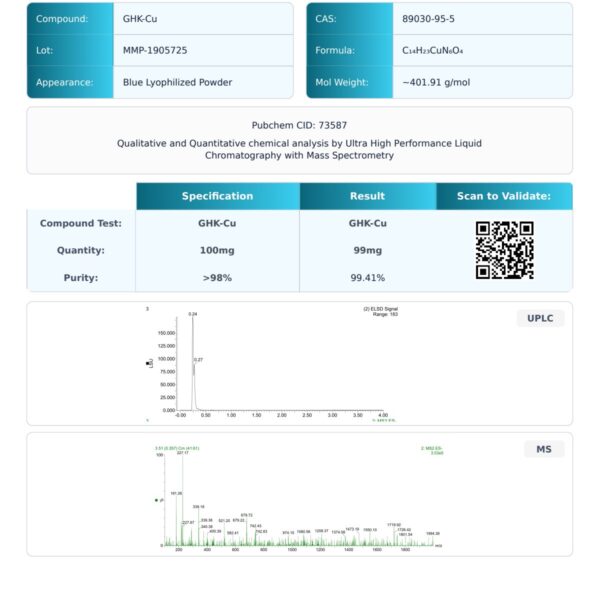
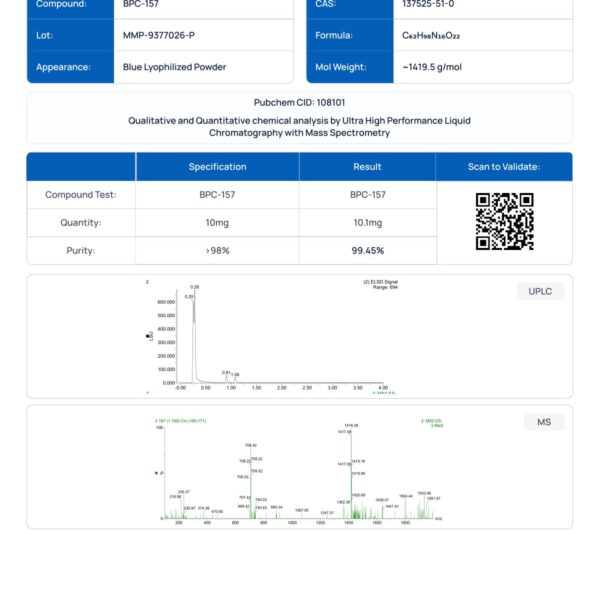
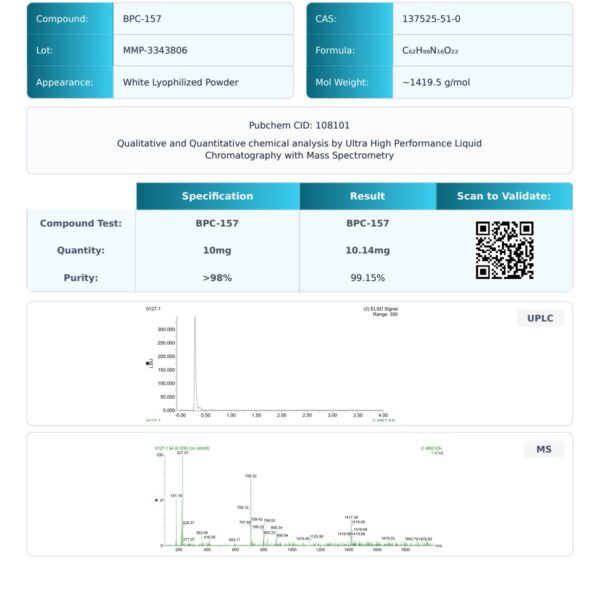
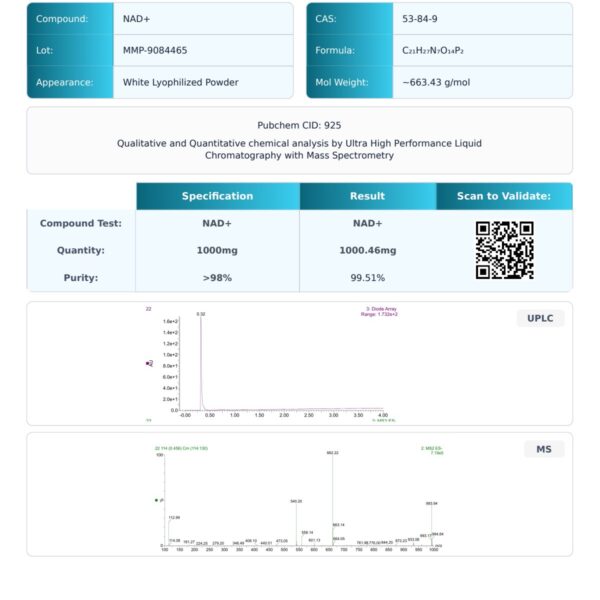
The gold standard for verifying peptide integrity is reversed-phase HPLC with UV detection, ideally coupled with mass spectrometry. Compare the chromatogram against the Certificate of Analysis from your supplier:
- Purity percentage: A drop from 98% to 90% purity indicates significant degradation.
- New peaks: Additional peaks eluting before or after the main peak represent degradation products.
- Retention time shift: A change in retention time suggests a chemical modification that alters hydrophobicity.
If you lack access to HPLC, consider outsourcing the analysis to a service laboratory. The cost of a single purity check is far less than the cost of repeating a failed experiment or publishing irreproducible data.
A Decision Framework for Degraded Peptides
| Observation | Likely Cause | Action |
|---|---|---|
| Yellowing of lyophilized powder | Oxidation | Discard; oxidation is rarely reversible |
| Cloudy solution | Aggregation or microbial growth | Discard; do not attempt to filter |
| HPLC purity drop <5% | Minor degradation | Acceptable for most assays; document and proceed |
| HPLC purity drop 5-15% | Moderate degradation | Use only for non-quantitative experiments; obtain fresh material |
| HPLC purity drop >15% | Severe degradation | Discard; results will be unreliable |
| New early-eluting peaks | Hydrolysis fragments | Discard; fragments will interfere with activity |
| New late-eluting peaks | Oxidation products | Discard; oxidized species often have altered activity |
What Not to Do
Do not attempt to rescue a degraded peptide by re-purifying it in-house unless you have validated methods and appropriate analytical capability. The risk of introducing new contaminants or losing material exceeds the benefit in most cases. Replace the stock instead.
Do not assume that a peptide stored at -80°C is automatically intact. Even at ultra-low temperatures, slow oxidation and deamidation continue. The only way to know is to verify.
Building Verification into Your Workflow
The most effective approach is to verify integrity at defined intervals rather than only when problems arise. For long-term studies, schedule a purity check at the midpoint and endpoint of the storage period. This creates a degradation timeline for your specific peptide under your specific conditions.
Build a Storage SOP for Batch Consistency
Standard operating procedures transform peptide storage guidelines for lab repeatability from individual habit into institutional practice. A comprehensive SOP documents every variable that affects peptide stability, ensuring consistency across researchers, shifts, and experiments.
| SOP Element | What to Document | Why It Matters |
|---|---|---|
| Receiving | Lot number, arrival date, visual inspection | Establishes baseline condition |
| Storage | Temperature, freezer location, desiccator use | Controls environmental variables |
| Reconstitution | Solvent, volume, date, technician | Standardizes the process |
| Aliquoting | Volume per aliquot, freeze-thaw count | Prevents cumulative damage |
| Verification | HPLC results, functional assays | Confirms integrity before use |
The SOP should specify handling limits: maximum time a vial may remain at ambient temperature, maximum number of freeze-thaw cycles per aliquot, and the shelf life assigned to each peptide sequence.
Batch consistency across an 18-month study requires more than a single SOP; it requires a purchasing strategy that anticipates your timeline. Working with a supplier that provides transparent Certificates of Analysis and consistent manufacturing quality reduces the variability introduced when you switch between lots.
Storage is not a passive step in your workflow. It is an active variable that determines whether your results reflect the peptide you designed or the degradation products that accumulated during storage.
Reproducible research demands that every variable remain constant across experiments, and peptide storage is no exception. The guidelines above give you a framework for controlling degradation, but the foundation is starting with material whose purity you can trust. Minuteman Peptides provides research compounds verified through HPLC and mass spectrometry, with transparent certificates of analysis that document purity before storage begins.
Frequently Asked Questions
Do peptides degrade faster when stored in solution versus lyophilized form?
Yes, significantly. Lyophilized (freeze-dried) peptides are in a dry, stable state that slows hydrolysis and oxidation, the primary degradation pathways. Once reconstituted in a solvent, water promotes chemical breakdown, so the peptide begins to degrade more quickly. As a rule, store peptides lyophilized whenever possible for long-term stability. If you must store a reconstituted peptide, it is usually stable for a few weeks at -20°C, but you should verify the stability profile for your specific sequence and buffer.
Is it necessary to store all research peptides at -80°C?
No, not all peptides require -80°C storage. For most lyophilized peptides, storage at -20°C in a frost-free freezer, protected from moisture and light, is sufficient for long-term stability. -80°C is often recommended for peptides with oxidation-prone residues like cysteine or methionine, or for extended storage beyond several months. Always check the Certificate of Analysis and the manufacturer’s recommendations for your specific peptide.
What is the best way to minimize freeze-thaw cycles in a research lab?
The most effective method is aliquoting. Before freezing a reconstituted peptide, divide the solution into single-use volumes based on your typical experiment size. Use low-protein-binding microcentrifuge tubes to prevent peptide loss. This way, you thaw only the amount you need for one experiment, and the remaining aliquots stay frozen, preserving their stability and ensuring consistent results across experiments.
How can researchers verify peptide integrity after long-term storage?
Analytical methods like HPLC and mass spectrometry are the gold standard for verifying purity and integrity after storage. A shift in the HPLC retention time or the appearance of new peaks can indicate degradation. Mass spectrometry can confirm the intact molecular weight and identify specific modifications, such as oxidation. For a quick check, visual inspection for precipitation or cloudiness in a reconstituted sample can signal an issue, though it is not definitive.