Table of Contents
- Why Independent Peptide Purity Verification Services Matter
- HPLC Peptide Purity Analysis: The Primary Quantitative Method
- Understanding ISO/IEC 17025 Laboratory Standards
- How to Read COA Documents for Research Peptides
- DIY vs. Professional Lab Verification: A Cost-Benefit Analysis
- Common Impurities and Quality Control Screening
- Selecting a Peptide Purity Verification Service Provider
- Conclusion: Building a Reliable Research Workflow
- Frequently Asked Questions
Last Updated: September 6, 2026
Why Independent Peptide Purity Verification Services Matter
Peptide purity verification services independently confirm a peptide’s stated purity, molecular weight, and composition through third-party laboratory testing rather than relying solely on a manufacturer’s claims. The gap between what a label claims and what is in the vial can compromise months of experimental work.
Impurities such as truncated sequences, residual trifluoroacetic acid from synthesis, or oxidation byproducts do not just reduce potency; they introduce variables that confound data interpretation. A peptide that fails purity verification can produce results that look scientifically valid but are biologically meaningless.
A lab with no stake in the synthesis gives you data that reflects what you are actually working with. This guide breaks down the testing methods, documentation standards, and provider selection criteria that determine whether your verification workflow is genuinely reliable.
HPLC Peptide Purity Analysis: The Primary Quantitative Method
High-performance liquid chromatography (HPLC) is the analytical workhorse for peptide purity verification services, separating peptide components based on their interaction with a stationary phase. HPLC peptide purity analysis quantifies chromatographic purity by measuring the area under the primary peak relative to all detected peaks, typically reported as a percentage. For research peptides, values of 98% or higher are generally expected for rigorous studies (peer-reviewed research).
The method dissolves a lyophilized powder sample, injects it into the HPLC system, and records the absorbance profile as components elute. HPLC data reveals both overall purity and specific impurities appearing as secondary peaks. A common mistake is treating the purity percentage as the sole metric when the impurity profile matters just as much.
Mass Spectrometry: Molecular Weight Confirmation
Mass spectrometry complements HPLC by confirming that the peptide’s molecular weight matches the theoretical value for the intended sequence. Electrospray ionization mass spectrometry (ESI-MS) and matrix-assisted laser desorption/ionization time-of-flight (MALDI-TOF) are the two techniques most frequently applied. While HPLC tells you how much of the sample is pure, mass spectrometry tells you whether the primary component is actually the peptide you ordered.
Sequence verification through mass spectrometry can detect errors that HPLC alone would miss, including incomplete deprotection, deletion sequences, or failed coupling steps during synthesis. When reviewing a certificate of analysis, you should expect to see both HPLC chromatographic purity data and mass spectrometry results, because each method answers a different question about sample quality.
Understanding ISO/IEC 17025 Laboratory Standards
ISO/IEC 17025 is the international standard for testing and calibration laboratories, specifying requirements for technical competence, impartiality, and consistent operation. A laboratory holding this accreditation has demonstrated that its methods, equipment calibration, and staff competency meet independently audited criteria.
When a supplier claims ISO/IEC 17025 certification, you should verify that the scope of accreditation actually covers peptide analysis methods such as HPLC and mass spectrometry. Some laboratories hold accreditation for unrelated testing categories, and the claim becomes marketing language rather than a substantive guarantee of analytical capability.
Regulatory compliance in this context also intersects with the research-use-only designation that governs peptide sales in the United States. The FDA’s guidance on research use only products clarifies that these compounds are not for human or animal consumption, which places the burden of quality assurance squarely on the researcher and supplier relationship.
How to Read COA Documents for Research Peptides
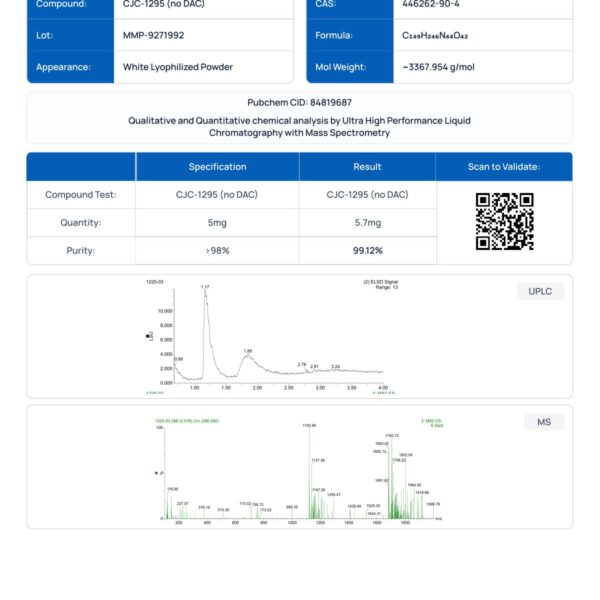
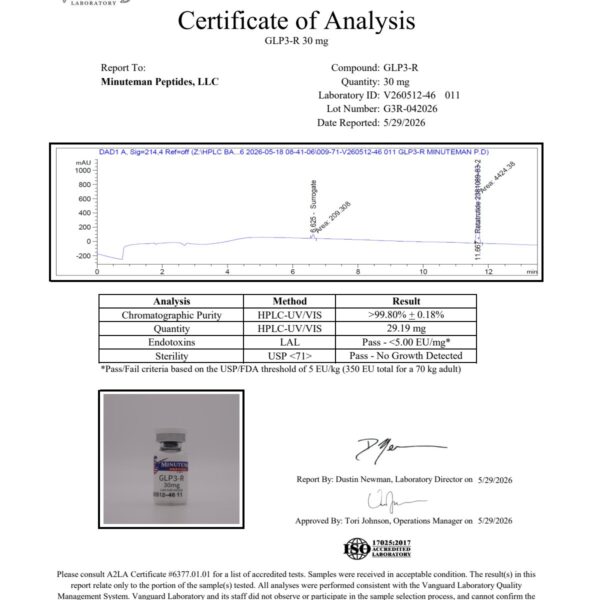
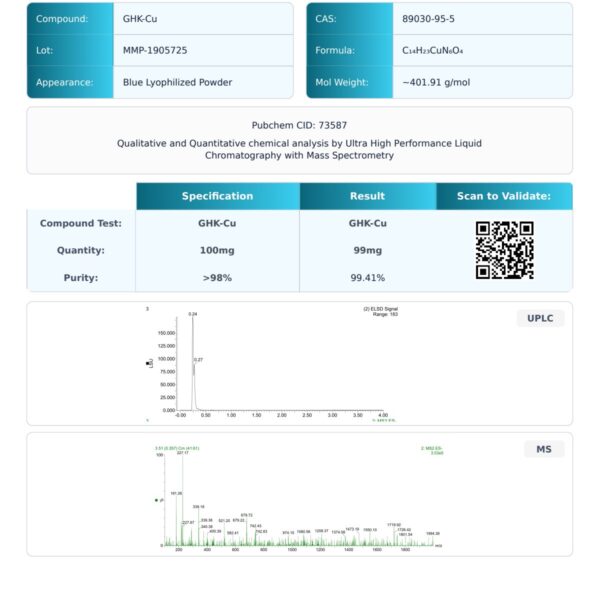
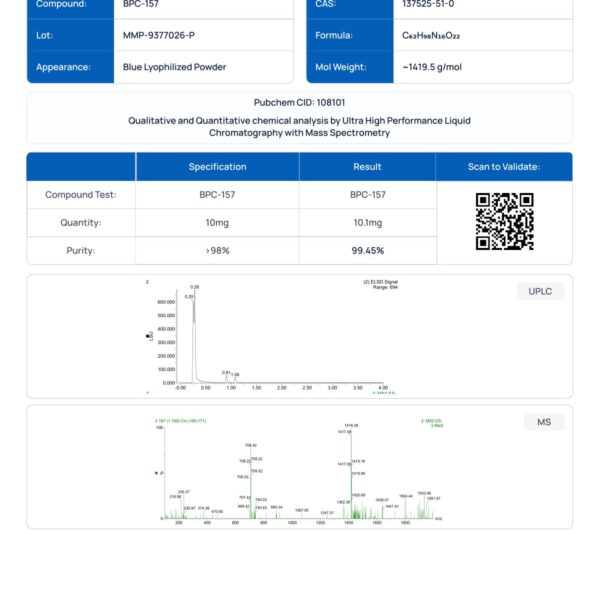
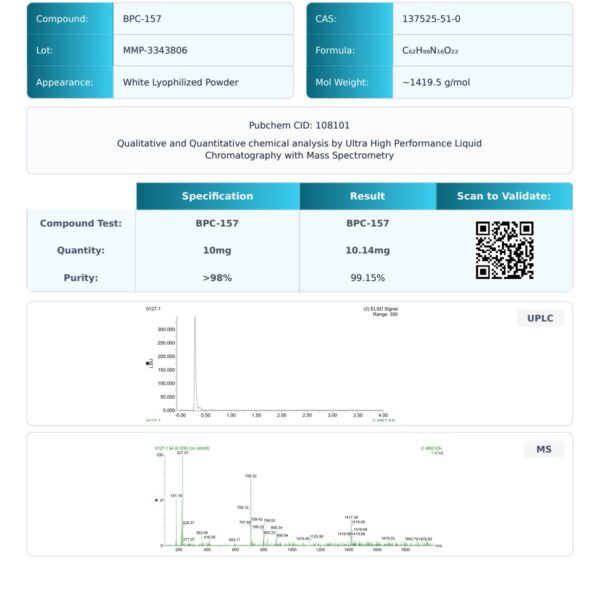
A certificate of analysis (COA) communicates test results for a specific peptide batch. It should include the batch or lot number, date of analysis, analytical methods used, and quantitative results for each test. Cross-reference the batch number with the label on your vial to confirm the document matches the material you received.
The purity section typically reports chromatographic purity from HPLC, expressed as a percentage, alongside the net peptide content, which accounts for counterions and moisture. Net peptide content is a separate figure from purity: a peptide can show 98% chromatographic purity but have a net peptide content of 80% due to salt content or residual water. This distinction directly affects how you calculate molar concentrations for your experiments.
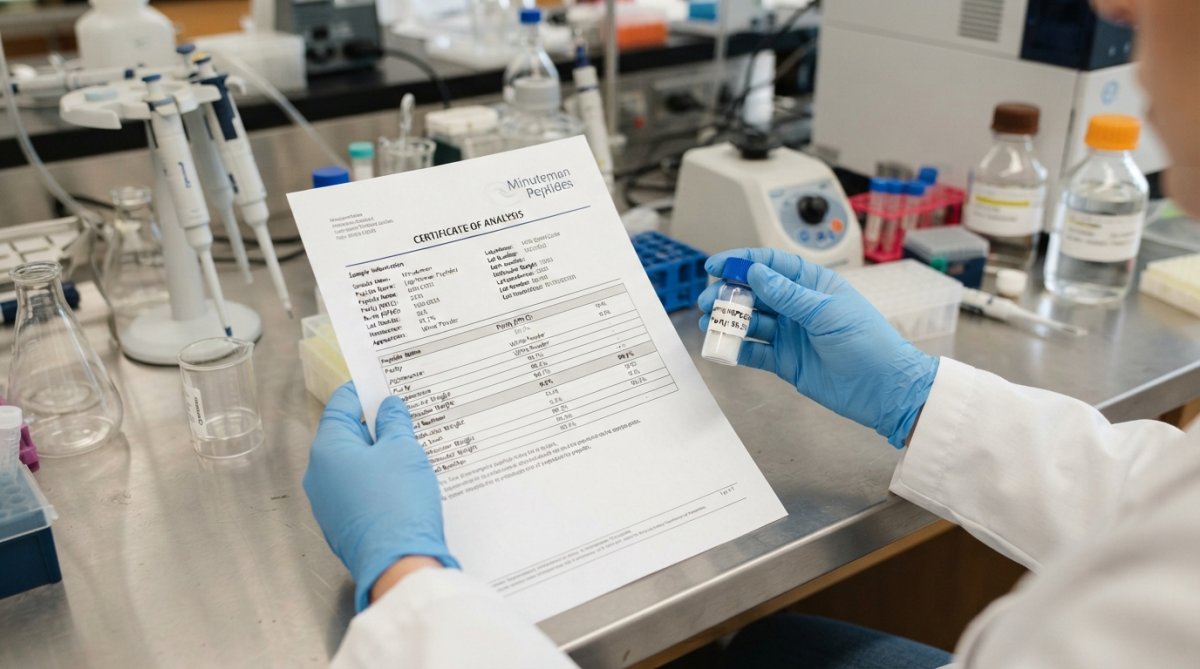
Look for the mass spectrometry result confirming molecular weight, and check that the reported value falls within the accepted tolerance of the theoretical molecular weight. Endotoxin testing results and trace metal analysis should also appear on a thorough COA, particularly for cell-based assays where these contaminants can trigger artifacts. If any of these sections are missing or vague, treat the document as incomplete rather than assuming the testing was performed but not reported.
DIY vs. Professional Lab Verification: A Cost-Benefit Analysis
The idea of verifying peptide purity in-house often appeals to researchers who want control and speed. But the reality of DIY verification is defined by equipment costs, method complexity, and a steep learning curve that most labs are not prepared for.
The False Economy of In-House Verification
A functional analytical HPLC system represents a capital investment that typically starts in the mid-five figures for a refurbished unit and can exceed $100,000 for a new, research-grade instrument. That figure excludes the recurring costs of columns, solvents, and calibration standards, which can add thousands of dollars annually. For most research laboratories, this expense is difficult to justify when peptide verification is an occasional need rather than a daily workflow.
Method development is not plug-and-play. Reversed-phase HPLC methods require careful selection of mobile phase modifiers, gradient profiles, and column chemistry to resolve closely related impurities. A method that works for one sequence may fail for another, and validating a robust method takes weeks of dedicated effort.
The Hidden Cost of ‘Free’ Core Facility Access
Core facilities may offer lower per-sample fees, but they typically operate first-come, first-served or prioritize primary departmental users. A purity analysis needed before a scheduled experiment can wait days or weeks in a queue.
Core facilities also vary widely in their experience with peptide analysis specifically. A facility that excels at protein characterization may have limited experience with the unique challenges of small peptide impurities, such as TFA adducts or oxidation products, leaving you with data that does not answer the purity question you actually asked.
What Professional Verification Actually Buys You
Outsourcing to a professional laboratory purchases more than instrument time: a validated method optimized for peptide analysis, a quality system ensuring calibration before your run, and staff who interpret peptide chromatograms and mass spectra daily.
The cost per sample at a professional lab varies depending on the depth of analysis, with comprehensive packages that include HPLC purity, mass spectrometry confirmation, and endotoxin screening. When you compare this to the cost of a single failed experiment run on unverified material, including reagents, cell culture supplies, and researcher time, the per-sample fee is almost always the cheaper option.
The Turnaround Time Reality
Most professional labs offer standard turnaround of 5 to 7 business days from sample receipt, with rush services available at a premium for results in 48 to 72 hours. The key to managing this timeline is parallel processing: order your verification testing the day your peptide arrives, not the day before you need it.
For labs that absolutely require same-day results, the only realistic option is a dedicated in-house system with staff who specialize in peptide analysis. For everyone else, the cost-benefit calculation strongly favors professional verification, where the per-sample cost is predictable, the data quality is defensible, and the risk of a failed experiment is transferred to a laboratory whose reputation depends on getting the analysis right.
Do not attempt to verify peptide purity using UV spectrophotometry alone. A single absorbance reading at 280 nm cannot distinguish between the full-length peptide and truncated sequences or other impurities that absorb at the same wavelength. This approach produces a number that looks like a purity measurement but is analytically meaningless for research-grade peptides.
Common Impurities and Quality Control Screening
Quality control screening for research peptides is not a single test but a panel of analyses designed to catch the specific impurities that arise from solid-phase peptide synthesis (SPPS) and downstream processing. Understanding what these impurities are and what they mean for your experiments is essential for interpreting a certificate of analysis.
Truncated Sequences: The Most Common Synthesis Error
Truncated peptides are the most frequent impurity in synthetic preparations, arising when a coupling step during SPPS fails to complete. These deletion impurities are insidious because they can retain partial biological activity or interfere with binding assays in unpredictable ways.
HPLC analysis typically reveals truncated sequences as a cluster of peaks eluting before the main product peak, since shorter peptides generally elute earlier under reversed-phase conditions. The resolution of these closely related impurities requires a well-optimized gradient method; a poorly designed method can co-elute truncated species with the main peak, producing a purity percentage that overstates the true quality of the material.
TFA Salts: The Hidden Mass That Is Not Peptide
TFA is used in synthesis as a cleavage reagent and ion-pairing agent in HPLC purification. After lyophilization, residual TFA remains bound as a salt, contributing to gross weight. A peptide showing 98% chromatographic purity can have a net peptide content of only 75% to 85% because TFA and residual water account for the remaining mass (PubMed).
When you weigh powder for a stock solution, you are weighing TFA salts and water along with the peptide. Calculating molar concentration from gross weight rather than net peptide content makes your actual concentration lower than intended, systematically biasing dose-response experiments. Always use the net peptide content figure on the COA for concentration calculations.
Oxidation Byproducts: A Storage-Dependent Risk
Peptides containing methionine, cysteine, or tryptophan are susceptible to oxidation during storage. Methionine oxidation to methionine sulfoxide is the most common modification and can alter conformation and biological activity. Oxidation can occur during synthesis, purification, or storage.
A responsible supplier tests peptides at release and also provides stability data that documents how purity changes over time under recommended storage conditions. When you receive a peptide, check the date of analysis on the COA and consider how long the material has been in storage. For peptides with oxidation-sensitive residues, request the most recently manufactured batch available.
Endotoxin and Heavy Metal Screening: When They Matter
Endotoxin screening is mandatory for cell-based assays and experiments involving primary cells or sensitive cell lines. Endotoxins are lipopolysaccharides from bacterial cell walls that can contaminate peptides during synthesis or handling; even trace levels can trigger inflammatory responses producing artifacts mistaken for peptide-specific effects. The standard assay is the limulus amebocyte lysate (LAL) test, reported in EU/mg, with a common acceptance threshold of less than 1.0 EU/mg for cell culture work.
Heavy metal screening is relevant for peptides intended for in vivo studies or for experiments where metal ions could interfere with the assay. Trace metals such as iron, copper, and zinc can catalyze oxidation reactions or bind to the peptide and alter its activity. Inductively coupled plasma mass spectrometry (ICP-MS) is the standard method for trace metal analysis, with results reported in parts per million (ppm).
A complete quality control panel for research peptides includes HPLC purity with a resolved impurity profile, mass spectrometry for molecular weight confirmation, net peptide content determination, and, for sensitive applications, endotoxin and heavy metal screening. A COA that reports only a single purity percentage is not sufficient evidence that a batch is suitable for rigorous research.
Selecting a Peptide Purity Verification Service Provider
Choosing a provider requires evaluating laboratory accreditation, method coverage, and documentation transparency. The ideal provider holds ISO/IEC 17025 accreditation with a scope explicitly including HPLC and mass spectrometry of peptides. Independent third-party testing means the laboratory has no relationship with the manufacturer, eliminating conflict of interest.
A provider that supplies raw instrument data, including chromatograms and spectra, allows you to verify the reported results rather than accepting summary numbers on faith. Turnaround time and sample submission processes should be clearly documented, and the provider should handle research-use-only materials with appropriate chain-of-custody protocols.
For researchers who prefer a simplified workflow, some suppliers integrate verification into their product pipeline. Minuteman Peptides sources materials from cGMP-certified, US-based manufacturing facilities and ensures every batch undergoes independent ISO/IEC 17025 certified third-party testing, with verified HPLC and mass spectrometry results disclosed in transparent certificates of analysis. This approach eliminates the need to coordinate separate testing logistics while maintaining the independence that meaningful verification requires.
| Verification Approach | Best For | Key Limitation |
|---|---|---|
| Independent third-party lab | Publication-ready data, regulatory compliance | Cost per sample, turnaround time |
| In-house HPLC | High-volume screening, method development control | Capital investment, staff expertise required |
| Supplier-provided COA | Initial screening, routine orders | Conflict of interest risk, verification needed |
Conclusion: Building a Reliable Research Workflow
Peptide purity verification services are not an administrative checkbox; they are the foundation of experimental integrity. The difference between a reliable result and a reproducible artifact often traces back to whether the material was independently verified before entering your workflow.
A reliable workflow pairs rigorous supplier selection with independent verification and thorough documentation review. Minuteman Peptides provides research compounds sourced from cGMP-certified US facilities, with every batch tested by an independent ISO/IEC 17025 certified laboratory and documented through verified HPLC and mass spectrometry results. Get started with Minuteman Peptides and build a research workflow where purity is confirmed, not assumed.
Frequently Asked Questions
What is the difference between HPLC and Mass Spectrometry in peptide testing?
HPLC (high-performance liquid chromatography) quantifies chromatographic purity by separating components and measuring their relative abundance, typically reporting a percentage like 98.7%. Mass spectrometry (MS) confirms the molecular weight of the peptide, verifying the correct sequence was synthesized and identifying truncation or deletion impurities. MS alone does not provide a purity percentage. A reliable peptide purity verification service uses both methods together: HPLC to establish the purity level and MS to confirm the molecular identity of the main peak.
How do I interpret a Certificate of Analysis (COA) for research peptides?
Start with the peptide name and sequence verification section to confirm the correct product. Next, check the HPLC chromatogram and the reported purity percentage, which reflects the main peak area relative to all detected peaks. Then review the mass spectrometry result to ensure the observed molecular weight matches the theoretical value within an acceptable tolerance. Finally, check the counterion content (often TFA), net peptide content, and any endotoxin or sterility screening results, as these affect accurate reconstitution and experimental dosing.
Why is ISO/IEC 17025 certification important for peptide testing labs?
ISO/IEC 17025 certification demonstrates that a testing laboratory operates a formal quality management system and has demonstrated technical competence for specific testing methods. It requires documented procedures, participation in proficiency testing, and regular audits by an accreditation body. When a peptide supplier’s Certificate of Analysis comes from an ISO/IEC 17025 certified lab, you have independent assurance that the analytical data is accurate, traceable, and reproducible. This matters because it verifies the supplier is not merely generating in-house numbers without external oversight.
What are the common impurities found in synthetic peptides?
Common impurities in synthetic peptides include truncated sequences from incomplete coupling reactions, deletion peptides missing one or more amino acids, and oxidation products, particularly at methionine or cysteine residues. Residual trifluoroacetic acid (TFA) from HPLC purification is also typical and affects salt content. Other potential contaminants include scavenger byproducts from cleavage steps and trace metals from synthesis reagents. A thorough peptide purity verification service screens for these impurities through HPLC impurity profiling, mass spectrometry, and sometimes trace metal analysis, ensuring your results are not confounded by side products.
How much does it cost to have a peptide tested for purity?
Pricing for third-party peptide purity testing varies based on the analytical methods required, sample quantity, and turnaround time. A basic HPLC purity check with mass spectrometry confirmation generally involves different costs than a simple HPLC run, and adding endotoxin testing or amino acid analysis increases the total further. Rather than relying on approximate figures, request a quote from the testing service or your peptide supplier. Many suppliers include a Certificate of Analysis from an ISO/IEC 17025 certified laboratory at no extra charge, making third-party testing an added safeguard rather than a routine expense.